Six Sigma — Complete Analysis with Data and Case Studies
⏱️ 9 min read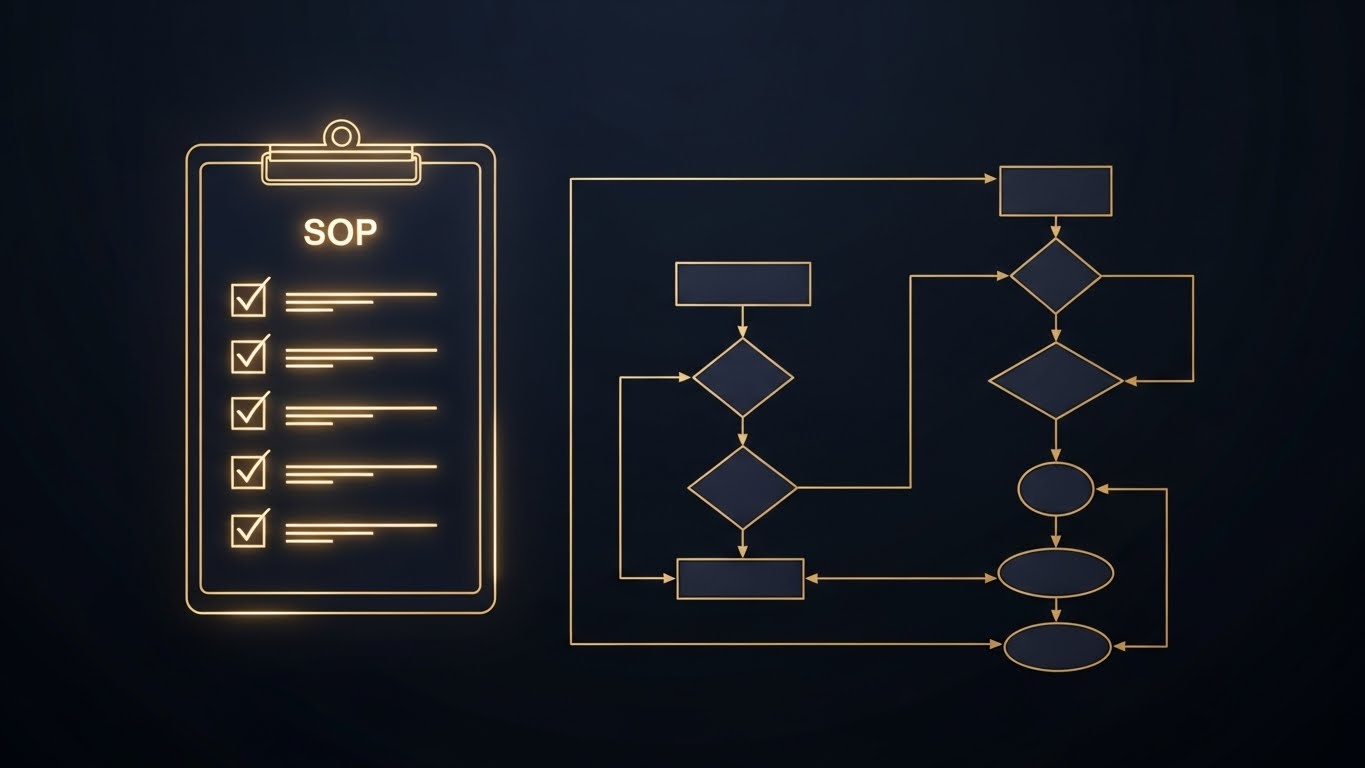
Did you know that preventable human errors and inefficient processes cost businesses an estimated $3 trillion globally each year? Beyond the staggering financial figures, these inefficiencies often manifest as employee frustration, burnout, and a silent erosion of team morale. As an HR & Culture Strategist, I believe that true operational excellence isn’t just about cutting costs; it’s about empowering people, fostering a culture of continuous improvement, and creating an environment where every team member feels valued and effective. This is where Six Sigma, a methodology often perceived as complex and technical, reveals its true human-centric power.
The Human Heart of Operational Excellence: Understanding Six Sigma
In 2026, as businesses navigate an increasingly dynamic landscape shaped by AI and automation, the principles of Six Sigma remain more relevant than ever. At its core, Six Sigma is a data-driven approach designed to eliminate defects and reduce variability in any process – from manufacturing to customer service, HR onboarding to software development. A “sigma level” represents how well a process performs, with Six Sigma aiming for near perfection: just 3.4 defects per million opportunities. But this isn’t merely about cold statistics; it’s about creating consistent, reliable experiences for both your customers and, crucially, your employees.
Beyond Defects: Six Sigma’s Impact on People and Culture
When processes are streamlined and defects reduced, the immediate impact on your team is profound. Imagine a customer support team no longer grappling with repetitive, solvable issues because the root cause has been addressed. Or an HR department that has optimized its onboarding process, leading to a 50% faster integration of new hires and significantly higher first-year retention rates. Six Sigma fosters a culture where problem-solving is collaborative, data-informed, and focused on sustainable solutions, not just quick fixes. It empowers employees by giving them the tools and the voice to identify bottlenecks, propose improvements, and directly contribute to organizational success. This collaborative spirit is particularly vital for distributed teams, where clear, efficient processes are the backbone of cohesion and productivity.
A Brief History and Its Enduring Relevance (2026 Perspective)
Originating at Motorola in the 1980s and popularized by General Electric, Six Sigma initially focused on manufacturing quality. However, its robust framework for process improvement quickly proved applicable across all industries. Today, in 2026, its relevance is amplified by advancements in artificial intelligence. AI doesn’t replace Six Sigma; it supercharges it. AI-powered analytics can process vast datasets exponentially faster, identify patterns and anomalies that human eyes might miss, and even predict potential process failures before they occur. This means teams can move from reactive problem-solving to proactive optimization, making the Six Sigma journey more efficient and impactful than ever before. It’s a testament to its enduring adaptability, seamlessly integrating with modern tools to achieve operational excellence.
The DMAIC Roadmap: A People-Centric Journey to Improvement
The most common and widely recognized framework within Six Sigma is DMAIC: Define, Measure, Analyze, Improve, and Control. Far from being a rigid, top-down mandate, DMAIC is a structured problem-solving approach that thrives on team involvement and cross-functional collaboration. It’s a journey your organization undertakes together, ensuring that improvements are not just implemented but embraced and sustained.
Define, Measure, Analyze: Unearthing Opportunities with Your Team
The journey begins with Define, where the problem or improvement opportunity is clearly articulated. This is where your team’s collective experience is invaluable. What are the pain points? What processes cause the most frustration for employees or customers? By engaging frontline staff, you gain invaluable insights into the true scope and impact of issues. Next, in the Measure phase, concrete data is collected to quantify the problem. This isn’t about blaming; it’s about understanding the current state. For example, an e-commerce business might measure the average time from order placement to delivery, or the percentage of returns due to incorrect items. Accurate measurement prevents assumptions and lays the foundation for data-driven decisions. Finally, the Analyze phase is where teams delve into the data to identify the root causes of defects or inefficiencies. This often involves brainstorming sessions, cause-and-effect diagrams, and statistical analysis. With AI tools, this phase is accelerated significantly. S.C.A.L.A. AI OS, for instance, can quickly analyze vast datasets of operational metrics, customer feedback, and employee performance to highlight the most impactful areas for intervention, shifting the team’s focus from data crunching to strategic problem-solving.
Improve and Control: Sustaining Gains and Empowering Future Growth
Once root causes are identified, the Improve phase kicks in. Here, the team collaboratively develops and tests potential solutions. This iterative process often involves small-scale pilots, gathering feedback, and refining approaches before full implementation. For example, if analysis reveals that outdated software causes delays in logistics optimization, the improvement phase might involve implementing a new system and training the team. The success of this phase hinges on employee buy-in and active participation; solutions designed by those who perform the work are far more likely to be adopted and maintained. The final phase, Control, is perhaps the most critical for long-term success. It’s about putting systems in place to sustain the improvements and prevent old problems from recurring. This might include establishing new standard operating procedures, implementing regular monitoring dashboards, or automating certain checks. The goal is to embed the improvements into the organizational culture, ensuring that gains are not temporary but become the new standard. This continuous feedback loop reinforces a culture of quality and empowers teams to proactively maintain excellence.
Six Sigma in the AI Era: Amplifying Human Potential
The year 2026 places Six Sigma at a fascinating intersection with artificial intelligence. While Six Sigma provides the structured methodology, AI provides the unparalleled processing power and insights that amplify its effectiveness, moving us beyond traditional Total Quality Management approaches by orders of magnitude. This synergy doesn’t diminish the human role; it elevates it, freeing up human intelligence for higher-level problem-solving and innovation.
Predictive Analytics and Automated Insights: The S.C.A.L.A. Advantage
Think about the data-heavy “Measure” and “Analyze” phases of DMAIC. Traditionally, these required extensive manual data collection and statistical expertise. Now, AI-powered business intelligence platforms like S.C.A.L.A. AI OS can automate much of this. Our S.C.A.L.A. Process Module, for example, can ingest data from across your entire SMB – sales, operations, customer service, HR – and, within minutes, identify patterns, anomalies, and correlations that would take human analysts weeks to uncover. Predictive analytics can forecast potential bottlenecks or quality issues with an accuracy rate of over 85% based on historical data, allowing teams to intervene *before* defects occur. This means a shift from reactive problem-solving to proactive prevention, empowering teams to be strategic rather than just responsive. Imagine reducing customer churn by 15% not by reacting to complaints, but by predicting at-risk accounts through AI-driven sentiment analysis and usage patterns.
Fostering a Culture of Continuous Improvement with Smart Tools
AI also plays a crucial role in the “Control” phase. Automated monitoring systems, powered by AI, can constantly track key process metrics and flag deviations in real-time. This provides immediate feedback to teams, allowing for quick adjustments and preventing minor issues from escalating. Furthermore, AI can personalize training and development paths for employees based on their roles and identified skill gaps in process adherence. This continuous learning environment, supported by intelligent tools, cultivates a robust culture of continuous improvement. Employees feel supported, informed, and equipped to maintain high standards, leading to a documented increase in job satisfaction by up to 20% in organizations that effectively integrate AI into their quality initiatives. It transforms Six Sigma from an occasional project into an ingrained way of working, where every team member is an active participant in maintaining and elevating standards.
Beyond the Basics: Tailoring Six Sigma for SMBs
The common misconception that Six Sigma is only for large enterprises with vast resources is simply untrue. While the underlying principles remain constant, SMBs can and should tailor their approach to make it manageable, impactful, and sustainable. It’s about smart application, not brute force.
Scaling Six Sigma: Practical Steps for Small and Medium Businesses
For SMBs, the key is to start small and focus on high-impact areas. Don’t try to tackle every process at once.
- Identify Critical Pain Points: Where are your team’s biggest frustrations? What customer complaints are most frequent? Start with one or two processes that significantly impact customer satisfaction or employee morale.
- Empower a Core Team: Designate a small, cross-functional team (perhaps 3-5 people) to lead the initial Six Sigma project. Provide them with basic training in DMAIC principles.
- Leverage Existing Data: You likely have more data than you think! Sales figures, customer service logs, website analytics, and even informal feedback are all valuable. AI tools can help organize and analyze this quickly.
- Focus on Quick Wins: Aim for improvements that can be implemented and show results within a few weeks or months. This builds momentum and demonstrates the value of the methodology. For example, reducing invoicing errors by 10% can significantly improve cash flow and customer trust.
- Integrate with Daily Operations: Don’t treat Six Sigma as a separate initiative. Weave its principles into daily stand-ups, team meetings, and performance reviews.
- Adopt a “Lean” Mindset: Combine Six Sigma’s focus on defect reduction with Lean principles of waste elimination for an even more powerful approach (Lean Six Sigma). This involves identifying and removing any activity that doesn’t add value to the customer or end-user.
Basic vs. Advanced Six Sigma: Choosing Your Path
Understanding the spectrum of Six Sigma application helps SMBs choose the right level of engagement. It’s not a one-size-fits-all solution.
| Feature | Basic Approach (SMB-Friendly) | Advanced Approach (Large Enterprise/Complex Issues) |
|---|---|---|
| Project Scope | Focused on specific, high-impact departmental or cross-functional processes (e.g., customer onboarding, inventory management). | Broad, enterprise-wide initiatives, often involving multiple departments and complex interdependencies. |
| Tools & Techniques | DMAIC, 5 Whys, Fishbone diagrams, basic control charts, simple data visualization. Augmented by AI for data collection. | Advanced statistical process control (SPC), Design of Experiments (DOE), regression analysis, Monte Carlo simulations. Full AI integration for predictive modeling. |
| Training Level | Green Belt (project leader), Yellow Belt (team member) equivalent. Focus on practical application. | Black Belt (full-time project leader, trainer), Master Black Belt (program manager, mentor). Deep statistical expertise. |
| Resource Investment | Moderate time commitment from internal teams, leveraging existing data and basic AI tools. | Significant investment in dedicated personnel, specialized software
|