🟢 EASY
💰 Quick Win
Process Analyzer
Why Process Mapping Is the Competitive Edge You’re Missing
⏱️ 9 min read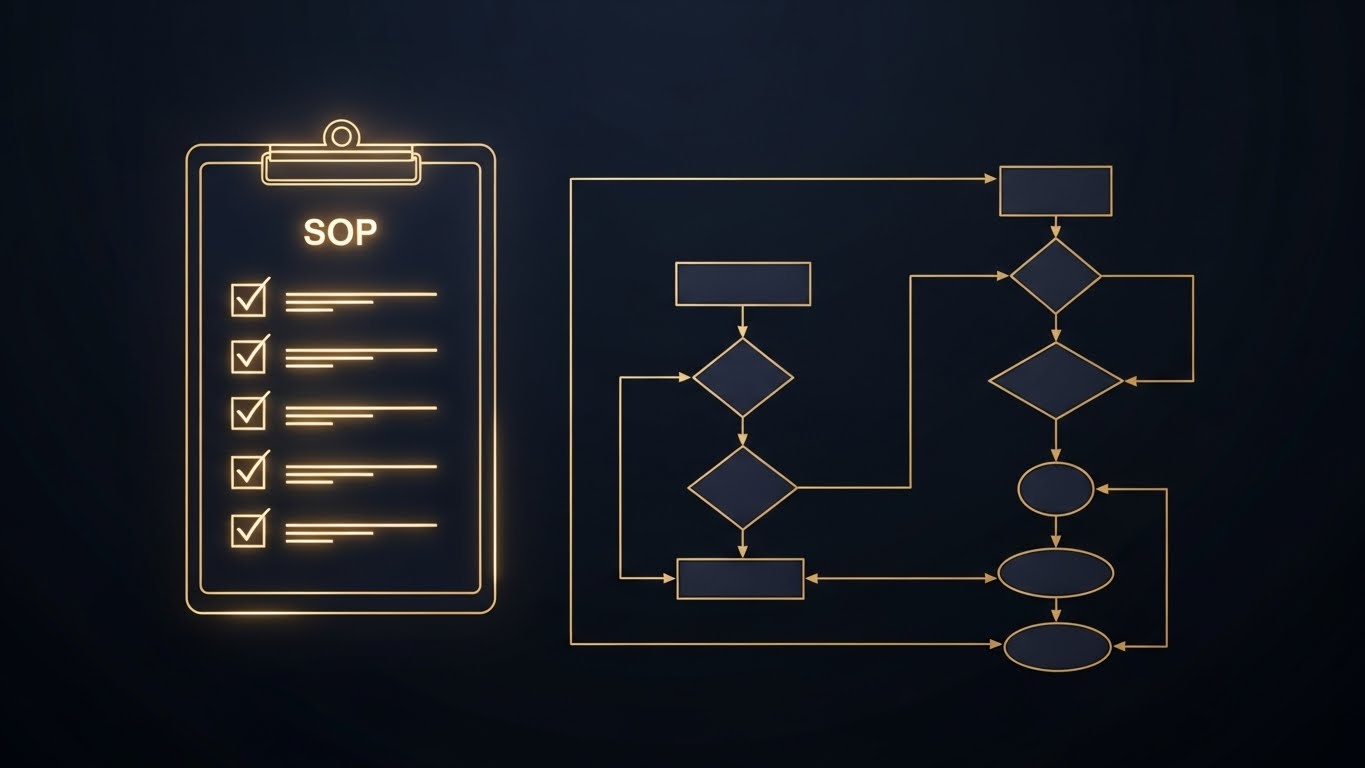
The Imperative of Process Mapping in a Globalized 2026
The relentless pace of global commerce, coupled with localized regulatory frameworks and cultural nuances, demands an unprecedented level of operational agility. For SMBs looking to expand their footprint, navigating these complexities without a clear understanding of their internal mechanisms is akin to sailing without a compass. Process mapping provides that essential navigational tool, translating intricate workflows into universally understandable visual representations.Bridging Operational Gaps Across Borders
Operating in multiple markets means confronting varying compliance requirements, different customer expectations, and distinct supply chain dynamics. A sales process that thrives in Düsseldorf might falter in Dubai due to cultural selling norms or local data privacy laws. Process mapping helps identify these variances, allowing for localized adaptation while maintaining core operational integrity. It fosters a shared understanding, bridging linguistic and cultural barriers by providing a visual, unambiguous blueprint for how work gets done, irrespective of geographical location. This standardization can reduce operational discrepancies by up to 25% when implemented effectively across diverse teams.The AI-Driven Evolution of Business Intelligence
By 2026, AI is not just enhancing, but fundamentally redefining business intelligence. Traditional process mapping, while valuable, was often a static snapshot. Today, AI-powered tools integrated with platforms like S.C.A.L.A. AI OS can dynamically analyze real-time operational data, performing automated process discovery and predictive analytics. This allows for continuous optimization, identifying bottlenecks before they impact international market entry or service delivery. We’re moving beyond simply documenting “what is” to intelligently predicting “what will be” and “what should be,” propelling scalability.What is Process Mapping? Demystifying the Core Concept
At its heart, process mapping is the systematic visualization of work activities and flows within an organization. It’s the art and science of depicting a series of steps, decisions, inputs, and outputs required to achieve a specific outcome. Think of it as creating a geographical map, but instead of terrain and cities, you’re charting tasks, roles, and information flows.Visualizing Workflow for Clarity and Control
A well-constructed process map provides unparalleled clarity. It answers critical questions: Who does what? When? What triggers the next step? What resources are needed? What are the potential points of failure? This visual representation eliminates ambiguity, fosters accountability, and becomes the single source of truth for how a specific operation should function. For an SMB dealing with varied team structures across continents, this clarity is paramount for consistent service delivery and product quality. For example, mapping out the entire customer onboarding journey reveals touchpoints that can be standardized globally while allowing for localized customization.Key Elements of an Effective Process Map
While specific notations may vary, all robust process maps typically include:- Inputs: What resources (information, materials, personnel) are required to start a process step?
- Outputs: What is the tangible or intangible result of a process step?
- Steps/Activities: The sequential tasks performed.
- Decisions: Points where a choice must be made, often leading to different paths.
- Roles/Responsibilities: Who is accountable for each step (often represented by swimlanes).
- Timelines/Dependencies: The sequence and timing of activities.
- Start and End Points: Clearly defined boundaries for the process.
Strategic Benefits: Why Process Mapping Fuels International Growth
The direct and indirect benefits of effective process mapping are profound, especially for SMBs with global ambitions. It’s not just about efficiency; it’s about building a resilient, adaptable, and globally competitive organization.Enhancing Efficiency and Reducing Redundancy
By meticulously mapping out processes, organizations can typically identify and eliminate 15-20% of redundant steps, bottlenecks, or non-value-adding activities. For instance, in a multi-market procurement process, you might discover that different regional teams are independently negotiating similar terms with the same global supplier, leading to missed volume discounts. Process mapping can consolidate these efforts, driving significant cost savings and accelerating operational cycles. This is particularly relevant for streamlining efforts like [Vendor Selection](https://get-scala.com/academy/vendor-selection), ensuring consistent and efficient partner engagement across all territories.Fostering Compliance and Risk Mitigation
Global expansion inherently introduces a myriad of compliance challenges, from GDPR in Europe to local tax regulations in Asia. Process maps serve as an auditable record of how compliance requirements are met at each stage. They highlight critical control points, enabling organizations to proactively identify and mitigate risks, whether financial, legal, or reputational. For example, a well-mapped data handling process ensures adherence to diverse data privacy laws, reducing the risk of costly penalties and safeguarding customer trust across all markets.Methodologies and Frameworks for Robust Process Mapping
Choosing the right methodology is crucial for creating maps that are not just visually appealing but functionally effective and universally understood.Leveraging BPMN 2.0 and Value Stream Mapping
Business Process Model and Notation (BPMN 2.0) is an international standard that provides a universally understood graphical notation for specifying business processes. Its strength lies in its ability to be understood by both business users and technical developers, making it ideal for cross-functional and cross-cultural teams. For SMBs, adopting BPMN 2.0 ensures that process documentation developed in Singapore is instantly comprehensible in São Paulo. Value Stream Mapping (VSM), originating from Lean manufacturing, focuses on visualizing the flow of materials and information required to bring a product or service to a customer. It’s particularly effective for identifying waste (non-value-adding steps) and improving end-to-end delivery cycles, making it invaluable for optimizing complex, global production or service delivery chains.Integrating Lean Six Sigma Principles
Lean Six Sigma, a methodology aimed at improving process performance by systematically removing waste (Lean) and reducing variation (Six Sigma), provides a powerful framework for utilizing process maps. The DMAIC (Define, Measure, Analyze, Improve, Control) cycle is directly supported by process mapping.- Define: Process mapping helps clearly define the problem and the process boundaries.
- Measure: The map serves as a baseline to collect data on process performance.
- Analyze: Visualizing the process aids in identifying root causes of inefficiency or defects.
- Improve: New, optimized processes are designed and mapped.
- Control: Process maps become the standard operating procedure to sustain improvements.