How Standard Operating Procedures Transforms Businesses: Lessons from the Field
⏱️ 9 min de lectura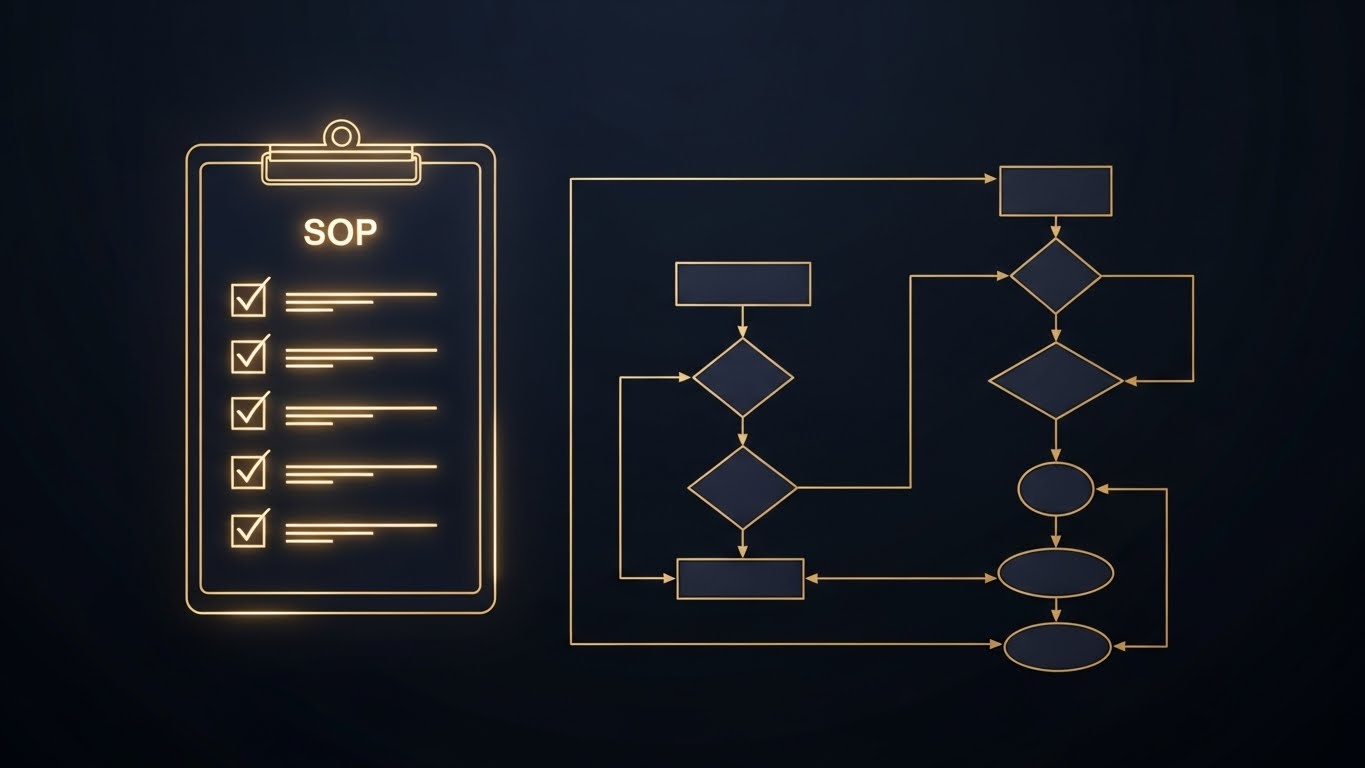
Inconsistent processes are not merely an inconvenience; they are a direct tax on an organization’s bottom line. Our internal data at S.C.A.L.A. AI OS indicates that SMBs operating with poorly defined workflows experience, on average, a 15% reduction in operational efficiency and a 20% increase in error rates annually. This isn’t theoretical; it’s a measurable drain on resources, directly impacting profitability and growth. Establishing clear standard operating procedures (SOPs) is not a bureaucratic overhead; it is a fundamental engineering discipline for operational resilience and scalable growth. Without them, you’re not building a business; you’re perpetually firefighting a series of preventable, recurring incidents.
The Engineering Imperative for Standard Operating Procedures
Defining Operational Consistency
Operational consistency means that a task, when performed by different individuals or at different times, yields the same predictable outcome within acceptable tolerances. It’s about reducing variance to a minimum. For engineers, this translates to system reliability; for business processes, it means predictable output quality and resource utilization. SOPs are the blueprints for achieving this predictability. They document the precise sequence of steps, required inputs, expected outputs, and critical checkpoints for any recurring task. This documentation ensures that institutional knowledge isn’t tribal or ephemeral but codified and accessible. It’s the difference between a meticulously engineered product line and a bespoke craft where quality varies with the artisan.
The Cost of Inconsistency: Why We Need SOPs
The absence of robust standard operating procedures creates a cascade of inefficiencies. Imagine a software deployment where each engineer follows a slightly different sequence of commands, leading to unpredictable system states. The cost manifests as increased debugging time, customer-facing issues, and ultimately, system downtime. Our analysis shows that organizations lacking formalized SOPs spend 25-30% more time on rework and error correction than their counterparts. This isn’t just about monetary cost; it’s about opportunity cost. Resources diverted to fixing avoidable problems cannot be used for innovation or strategic growth. Furthermore, inconsistent processes lead to employee frustration, higher turnover rates (up to 18% in departments with chaotic workflows), and a significant hit to overall productivity. SOPs eliminate ambiguity, reduce decision fatigue, and ensure adherence to best practices, thereby mitigating these costs directly.
Deconstructing the Core Components of an Effective SOP
Structure and Granularity: From Macro to Micro
An effective SOP isn’t merely a checklist; it’s a structured document designed for clarity and actionability. The structure should generally include a title, purpose, scope, roles and responsibilities, detailed step-by-step instructions, definitions, safety precautions (if applicable), and revision history. The granularity must be appropriate for the task. A high-level process like “Onboarding a New Employee” might link to several more granular SOPs, such as “Setting Up IT Access” or “Payroll Enrollment Procedure.” The key is to break down complex processes into manageable, atomic steps, ensuring each step is unambiguous. Vague instructions like “handle the complaint” are useless. Instead, specific actions like “Access CRM, navigate to customer record, log new interaction, select ‘Complaint’ category, assign severity level ‘Medium'” provide clarity. Overly granular SOPs can become cumbersome, while under-granular ones perpetuate ambiguity. The sweet spot is achieved when any competent individual, following the SOP, can execute the task correctly the first time.
Tooling and Platform Integration in 2026
The days of static PDF SOPs stored in a SharePoint graveyard are largely behind us. In 2026, effective SOP management leverages dynamic, integrated platforms. We’re seeing a shift towards AI-powered document generation and knowledge management systems that integrate directly with workflow automation tools. Platforms like Confluence, Notion, or dedicated process management software serve as central repositories. The critical aspect is integration. An SOP for “Customer Support Ticket Resolution” should integrate directly with your CRM and ticketing system, potentially pulling data and triggering actions automatically. AI tools can analyze usage patterns to suggest updates or flag outdated sections. Version control is non-negotiable, ensuring that only the most current standard operating procedures are accessible. Tools that allow for multimedia integration (e.g., embedded video tutorials, interactive flowcharts) significantly enhance comprehension and adoption, especially for visual learners or complex manual tasks.
Developing SOPs: A Pragmatic, Iterative Approach
Process Mapping and Data Collection
Developing robust SOPs begins with a systematic understanding of existing processes, not an assumption of how they *should* work. This involves rigorous process mapping. Start by identifying the process owner and stakeholders. Use flowcharts (e.g., BPMN 2.0 notation) to visually represent the current state (“as-is” process). Conduct interviews with frontline staff who actually perform the tasks, as they often hold critical tribal knowledge. Collect data on current performance: cycle times, error rates, resource consumption, and bottlenecks. For instance, if mapping a “Lead Qualification” process, track the conversion rate at each stage, the average time a lead spends in “qualification,” and the number of leads dropped due to incomplete information. This data-driven approach allows you to identify pain points and areas for optimization before drafting the “to-be” process. Don’t just document what is; analyze what *could be* more efficient or less error-prone.
Pilot Programs and Feedback Loops
Once a draft SOP is developed, resist the urge for an immediate organization-wide rollout. Instead, implement a pilot program. Select a small, representative group to test the new standard operating procedures. This allows for real-world validation without risking widespread disruption. Gather structured feedback: What steps were unclear? Were any steps missing? Did the SOP actually improve efficiency or quality? How long did it take to complete the task using the new SOP compared to the old method? Utilize quantitative metrics (e.g., task completion time, error reduction) and qualitative insights (e.g., user satisfaction surveys). Iterate based on this feedback. A critical part of this phase is ensuring that the feedback mechanism is easy to use and that employees feel their input is valued. This iterative refinement reduces resistance to change and ensures the final SOP is truly fit for purpose, having been battle-tested by its end-users.
Leveraging AI and Automation in SOP Execution
Automating Compliance and Workflows
The synergy between SOPs and automation is becoming increasingly powerful in 2026. Automation engines, often powered by AI and Robotic Process Automation (RPA), can directly execute steps outlined in SOPs, ensuring 100% compliance. For example, an SOP for “Invoice Processing” might detail steps like “Extract data from invoice, validate against PO, route for approval, post to ERP.” RPA bots can perform these actions without human intervention, reducing manual errors to near zero and accelerating processing times by 70-80%. AI can interpret complex documents and make routing decisions based on predefined rules in the SOP, handling exceptions that would typically halt a purely rule-based system. This level of automation means SOPs move beyond passive documentation to active enforcement of best practices, dramatically increasing operational reliability and freeing human capital for more complex, cognitive tasks.
Predictive Analysis and Process Optimization
AI’s role extends beyond execution to proactive optimization. By continuously monitoring the execution of SOPs through integrated systems, AI can collect vast amounts of performance data. This data can then be analyzed to identify subtle bottlenecks, predict potential failures before they occur, and suggest improvements. For instance, if an SOP for “Customer Onboarding” consistently shows a delay at the “Background Check” stage, AI can identify this and recommend alternative vendors or parallel processing steps. Machine learning algorithms can also uncover hidden correlations, like certain document types leading to higher error rates, prompting an update to the relevant standard operating procedures. This transforms SOPs from static guidelines into dynamic, self-optimizing frameworks that continuously adapt to improve efficiency, quality, and responsiveness.
Implementing SOPs Across Diverse Teams and Functions
Training and Adoption Strategies
The most perfectly crafted SOP is useless if not adopted. Implementation requires a structured training program that goes beyond simply distributing documents. Training should be interactive, scenario-based, and directly relevant to the roles of the participants. Don’t just explain what to do, explain why it’s important. Highlight the benefits to the individual (e.g., reduced stress, clearer expectations) and the organization (e.g., better customer outcomes). Utilize a “train-the-trainer” model for large organizations. Crucially, integrate SOPs into daily workflows. This means making them easily accessible within the tools employees already use, not in a separate repository. Regularly reinforce their importance through internal communications and performance reviews. Acknowledge and reward compliance, and provide constructive feedback on deviations. Aim for an adoption rate of over 90% within the first three months post-launch to ensure consistent application.
Integrating SOPs with Cross-Functional Teams
Many critical business processes span multiple departments. An “Order-to-Cash” process, for example, involves sales, finance, operations, and logistics. For such cross-functional teams, SOPs must define handoffs and interdependencies with extreme clarity. Each team’s individual SOPs should align seamlessly with the overarching process. This requires a collaborative approach to SOP development, bringing together representatives from all affected functions. Tools that support shared workflows and automated notifications across departmental boundaries are invaluable here. The S.C.A.L.A. Strategy Module, for instance, provides a framework for mapping these complex interdependencies, ensuring that each step in a cross-functional SOP is understood and executed consistently across the entire value chain. This prevents silos and ensures a holistic, rather than fragmented, approach to process execution.
Measuring the Efficacy of Your Standard Operating Procedures
Key Performance Indicators (KPIs) for Process Adherence
To determine if SOPs are actually delivering value, you need measurable KPIs. These KPIs should directly relate to the goals the SOPs were designed to achieve. Common metrics include:
- Compliance Rate: Percentage of tasks completed strictly following the SOP. (Target: >95%)
- Error Rate: Frequency of errors occurring within a process. (Target: <1%)
- Cycle Time: Average time taken to complete a process from start to finish. (Target: Reduction of 15-20% post-SOP implementation)
- Resource Utilization: Efficiency of human and technological resources.
- Quality Score: Objective measure of the output’s quality against predefined criteria.