Why Process Documentation Is the Competitive Edge You’re Missing
⏱️ 9 min de lectura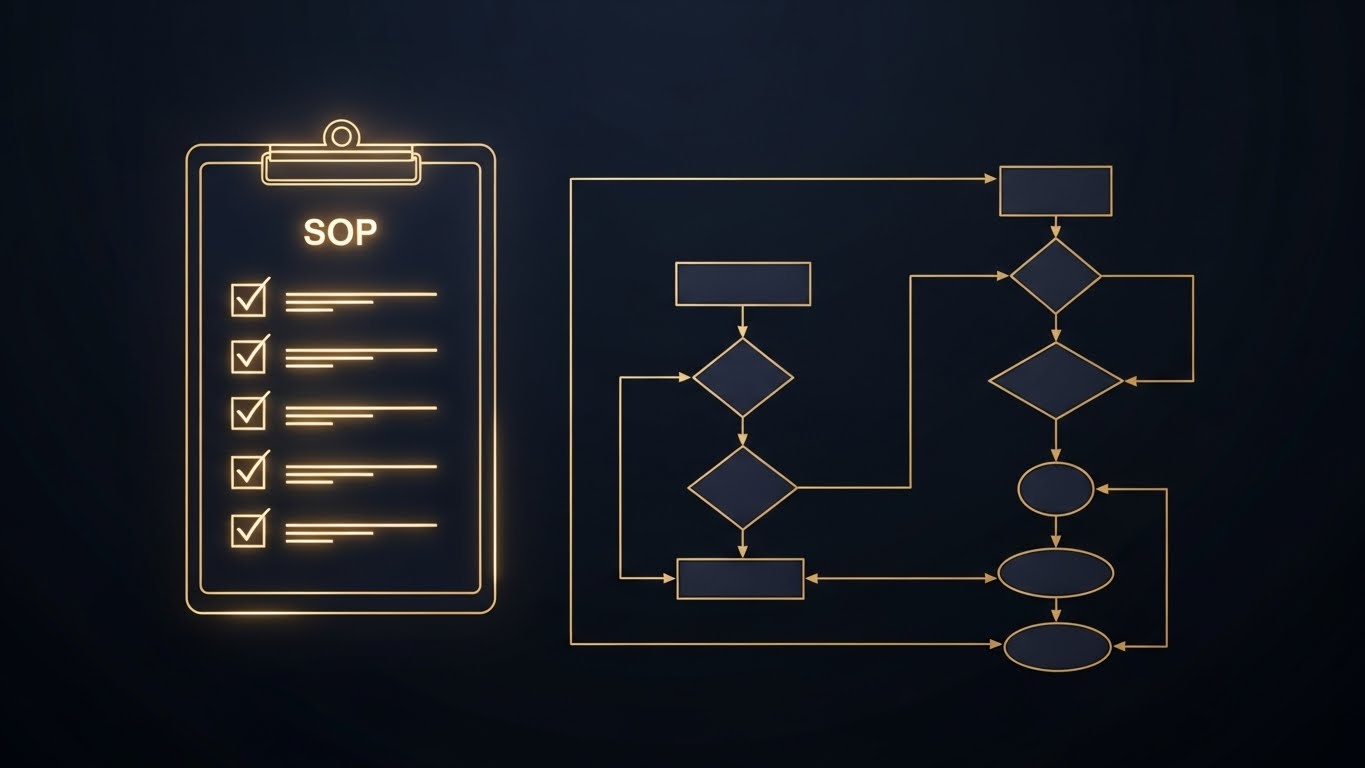
Let me tell you something I’ve seen play out in the trenches more times than I care to count: a startup, brilliant idea, disruptive tech, burning bright… and then it hits a wall, not because the market turned, but because it choked on its own success. The silent killer? Lack of structure. Specifically, a gaping hole where robust process documentation should have been. I’ve watched multi-million dollar ventures falter, not from external threats, but from internal chaos, because nobody bothered to write down how things actually get done. It’s like building a skyscraper on quicksand – eventually, it’s going to collapse. In 2026, with AI-driven acceleration, this oversight isn’t just risky; it’s a death sentence.
The Silent Killer: Why Ignoring Process Documentation Will Sink Your Startup
You’re moving fast, breaking things, disrupting. I get it. The last thing you want to do is slow down for what feels like paperwork. But this mindset is precisely what takes promising ventures from rocket ships to shipwrecks. I’ve seen companies lose 30-40% productivity purely from inefficiencies stemming from undocumented processes. It’s not just about compliance anymore; it’s about survival and competitive edge.
The Cost of Tribal Knowledge
Every founder eventually realizes that relying on “tribal knowledge” – that unspoken understanding residing solely in the heads of your key people – is a ticking time bomb. What happens when your star developer leaves? Or your head of sales goes on extended leave? Poof! Critical operational know-how evaporates overnight. I once had a client lose 6 months of development momentum after a critical engineer departed, simply because his entire workflow was undocumented. Their IP was there, but the “how-to” wasn’t. The cost of replacing that knowledge, not just the person, was astronomical – easily six figures in lost time and revenue.
Lost Opportunities and Stalled Growth
Growth without documented processes isn’t scaling; it’s just adding more chaos. You hit a bottleneck and can’t diagnose it because the workflow isn’t clear. You onboard new hires, and it takes them 3-6 months to become truly productive, instead of 1-2, because there’s no clear playbook. This isn’t just an efficiency problem; it’s a direct brake on your ability to seize new market opportunities. Imagine missing a crucial sales cycle because your lead qualification process is a black box only one person understands.
What Exactly IS Process Documentation, Anyway? (And Why It’s Not Just for Bureaucrats)
Forget the dusty binders in a forgotten closet. In 2026, process documentation is a dynamic, living asset – the DNA of your business operations. It’s not just for massive corporations; it’s the foundation for agile, AI-powered growth in SMBs.
Defining the Unwritten Rules
At its core, process documentation is the act of systematically capturing how tasks, activities, and workflows are executed within your organization. This includes everything from how a customer support ticket is handled, to the steps for deploying a new software update, to the procedure for processing payroll. It defines who does what, when, why, and how, in a clear, concise, and accessible format.
Beyond the Manual: A Living Asset
Modern process documentation isn’t a static manual; it’s a living, breathing guide that evolves with your business. With the advent of AI, platforms like S.C.A.L.A. AI OS are transforming documentation from a chore into an intelligent resource, automatically suggesting improvements, flagging inconsistencies, and even generating process maps from observed workflows. It becomes your institutional memory, your training guide, and your operational blueprint, all in one.
The Unseen ROI: How Documenting Processes Boosts Your Bottom Line
Let’s talk brass tacks. You want to know if this “documentation” thing actually pays off. It does, big time. I’ve seen it unlock efficiencies that directly translate into millions saved and earned for my clients.
Efficiency Gains and Cost Reduction
Documented processes reduce ambiguity, errors, and rework. Studies show that organizations with mature process documentation can reduce operational costs by up to 25%. Think about it: fewer mistakes mean less time spent fixing them. Clear steps mean faster execution. In the finance sector, for example, robust process documentation can cut audit preparation time by 40-50% and significantly reduce compliance fines.
Enhanced Customer Satisfaction
When your internal processes are smooth, consistent, and well-understood, your external interactions improve dramatically. Faster response times, fewer errors in service delivery, and consistent quality across all customer touchpoints lead to happier customers. Happy customers stick around longer, buy more, and become your best advocates. It’s a direct line from internal order to external loyalty, boosting customer retention rates by 15-20%.
2026: AI, Automation, and the New Era of Process Documentation
This isn’t your grandma’s documentation. The landscape has been completely reshaped by AI and intelligent automation. If you’re not leveraging these tools, you’re not just behind; you’re operating blind.
AI-Powered Process Mining and Discovery
One of the biggest hurdles used to be *finding* the processes to document. Not anymore. In 2026, AI-powered process mining tools analyze digital footprints (system logs, user interactions, database entries) to automatically discover and map your actual workflows. This can reveal hidden bottlenecks, shadow IT processes, and non-compliance activities that no manual audit would ever uncover. I’ve seen this cut process discovery time by 70% and reveal efficiency gaps saving clients tens of thousands monthly.
Automating the Documentation Itself
The dreaded “writing it all down” is becoming a thing of the past. AI can now auto-generate initial drafts of Standard Operating Procedures (SOPs) based on observed process data, or even from simple prompts. Tools are emerging that watch user actions and translate them into step-by-step guides. This drastically reduces the manual effort and ensures consistency, freeing up your team to focus on optimization rather than transcription.
From Chaos to Clarity: Practical Steps to Get Started with Process Mapping
Alright, so you’re convinced. You want to ditch the chaos. Where do you even begin? Don’t try to boil the ocean. Start small, iterate, and build momentum.
Identify Your Critical Processes
You can’t document everything at once. Prioritize. Which processes are mission-critical? Which cause the most headaches or bottlenecks? Start with those that impact revenue, customer satisfaction, or compliance. For example, ‘Customer Onboarding,’ ‘Sales Lead Qualification,’ ‘Product Development Lifecycle,’ or ‘Bug Reporting & Resolution.’ Focus on high-impact areas where improvements will be immediately felt, like reducing onboarding time by 25% for new hires.
Choose Your Tools and Methodologies
You don’t need a million-dollar BPM suite to start. For simple processes, a flowchart in Miro, Lucidchart, or even a detailed bullet-point list in a shared document (Google Docs, Notion) is sufficient. For more complex operations, consider BPMN (Business Process Model and Notation) for mapping. The key is consistency and accessibility. As you scale, you’ll naturally gravitate towards more sophisticated platforms that can integrate with your existing tech stack and leverage AI.
The Core Components of Robust Process Documentation
A good piece of process documentation isn’t just a list of steps. It’s a comprehensive guide, leaving no room for guesswork. Think of it as a flight plan for your business operations.
Roles, Responsibilities, and RACI
Who does what? This is fundamental. Implement a RACI matrix (Responsible, Accountable, Consulted, Informed) for each significant process. This clarifies ownership and ensures everyone knows their role. I’ve seen teams paralyzed by confusion, wasting days trying to figure out who was supposed to approve what. A clear RACI matrix can reduce inter-departmental conflicts by up to 30%.
Inputs, Outputs, and Triggers
Every process has a starting gun (trigger), ingredients (inputs), and a desired outcome (outputs). Clearly define these. What initiates the process? What information, resources, or approvals are needed? What is the tangible result? For example, a “new customer subscription” (trigger) might require “customer details, payment info” (inputs) and result in “account created, welcome email sent, service activated” (outputs). This structured approach helps in identifying dependencies and potential failure points.
Building a Culture of Documentation: It’s Not a One-Off Project
This is where many startups fail. They document once, then let it rot. Process documentation is a continuous journey, not a destination. It requires buy-in from the top down and engagement from the ground up.
Empower Your Team
Don’t make documentation solely the burden of one department. Empower and incentivize your team members – the ones actually doing the work – to document and update their processes. They are the subject matter experts. Provide them with easy-to-use tools and allocate dedicated time for this. Consider gamification or recognition programs for teams with the most up-to-date and valuable documentation. When teams own their processes, the quality skyrockets.
Integrate into Daily Workflow
Documentation shouldn’t be an “extra” task. Integrate it into your daily operations. New process? Document it. Process changed? Update it. Make it part of your sprint planning, your retrospectives, your onboarding, and your performance reviews. Platforms like S.C.A.L.A. AI OS are designed to embed process intelligence directly into workflows, making documentation a seamless part of operations, rather than a separate chore.
Avoiding the Documentation Graveyard: Common Pitfalls and How to Sidestep Them
I’ve witnessed the best intentions pave the road to documentation graveyards. Here’s how to avoid becoming another headstone.
Over-Documentation vs. Under-Documentation
The sweet spot is clarity without verbosity. Over-documenting leads to unreadable, unmaintainable behemoths that nobody uses. Under-documenting leaves critical gaps. Focus on “just enough” information: clear steps, defined roles, expected outcomes, and necessary context. A good rule of thumb: if a process takes longer to read than to do, it’s likely over-documented.
Lack of Maintenance and Updates
This is the most common killer. A document is only useful if it’s accurate. Establish a clear review cycle (e.g., quarterly or annually) for all critical processes. Assign ownership for each document to a specific role or team. Leverage AI tools that can flag outdated information or suggest updates based on observed changes in workflow patterns. This ensures your documentation remains a living, breathing asset.
Process Documentation as Your Startup’s Disaster Recovery Plan
You never want to think about the worst-case scenario, but a true leader prepares for it. Comprehensive process documentation is your frontline defense when disaster strikes, whether it’s a natural calamity or a