How Lean Management Transforms Businesses: Lessons from the Field
⏱️ 9 min di lettura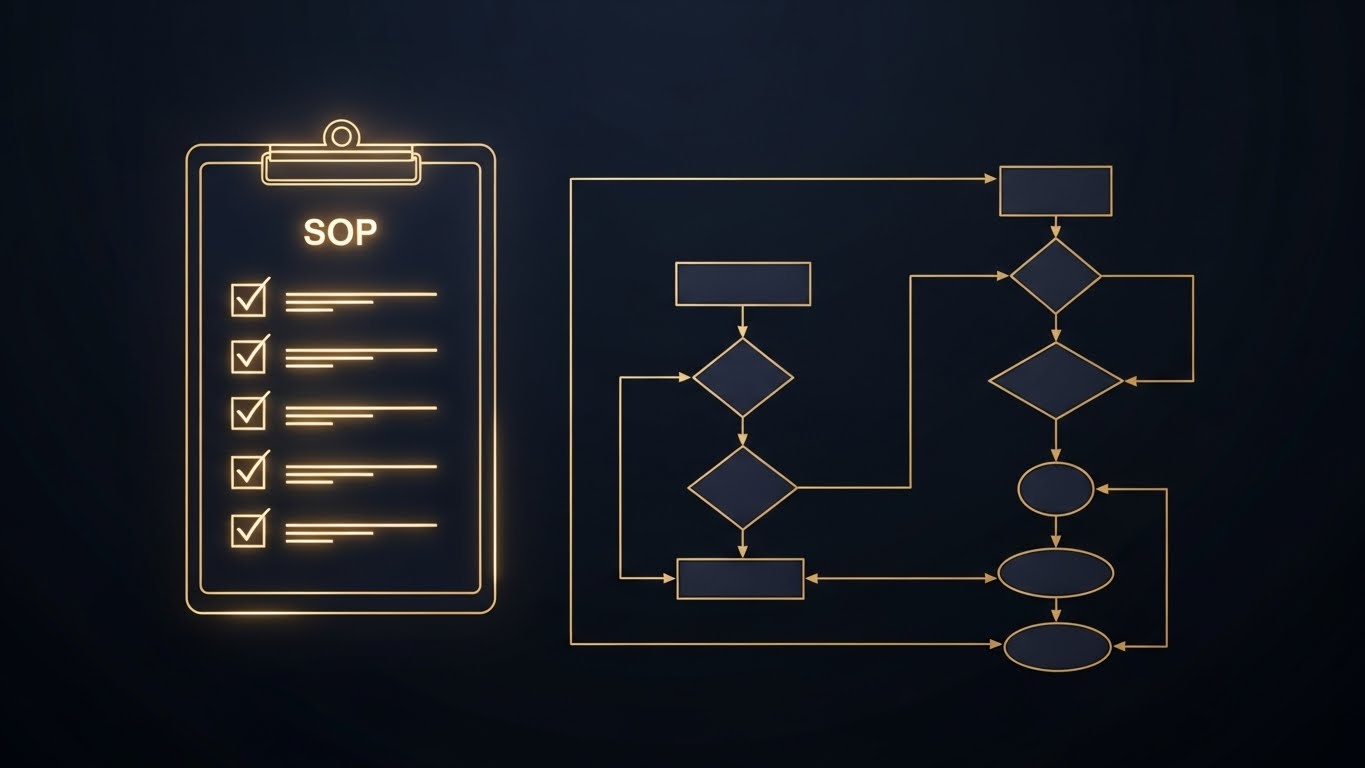
In 2026, if your SMB isn’t rigorously optimizing its operational efficiency, you’re not just losing ground; you’re actively generating organizational entropy. The often-cited statistic that approximately 85% of process improvement efforts fail to deliver sustained results isn’t a failure of intent, but often a failure of method. This isn’t about chasing the latest management fad; it’s about engineering robust systems. We need to dissect lean management not as a theoretical construct, but as a practical framework for ruthlessly eliminating waste and systematically enhancing value delivery, especially when augmented by intelligent automation.
Deconstructing Lean Management: Beyond the Buzzwords
At its core, lean management is an operational philosophy derived from the Toyota Production System, designed to maximize customer value while minimizing waste. It’s not a toolkit; it’s a mindset. Forget the marketing fluff; think about process engineering with a singular focus: efficiency and effectiveness. This means understanding exactly what the customer values and then configuring your entire operation to deliver that value with the least possible friction and resource expenditure. For SMBs competing in a rapidly evolving market, this isn’t optional; it’s existential.
Core Principles: Value, Flow, Pull, Perfection
The foundational principles of lean management are straightforward, yet profoundly impactful:
- Specify Value: Define precisely what the customer considers valuable. In software, this isn’t just a feature list; it’s the problem solved, the user experience gained. A 2025 study showed that features rarely used still consume an average of 15-20% of development resources in typical SaaS products. Lean demands you identify and build only what truly adds value.
- Identify the Value Stream: Map all steps, from raw materials or initial concept to final delivery, that contribute to creating the specified value. This often reveals non-value-adding steps that consume resources and time without customer benefit.
- Make Value Flow: Eliminate obstacles and interruptions in the value stream to ensure smooth, continuous progression. This means reducing handoffs, batch sizes, and wait times. Think about reducing cycle time in a software deployment pipeline from 3 hours to 30 minutes.
- Establish Pull: Produce only what the next stage of the process or the customer needs, when they need it. This avoids overproduction, a significant source of waste. Instead of pushing features, pull them based on user feedback and market demand.
- Seek Perfection: Continuously improve the process through iterative cycles of learning and optimization (Kaizen). This is not a one-time project; it’s an ongoing commitment to excellence, often yielding 5-10% efficiency gains year-over-year in well-implemented systems.
The Engineering Mindset: Data-Driven Optimization
Applying lean management requires an engineering-minded approach. We measure, we analyze, we hypothesize, we test, we iterate. This isn’t about gut feelings; it’s about quantifiable data. For example, identifying a bottleneck in a customer support workflow is more than just observing delays; it’s about tracking average ticket resolution times, agent utilization rates, and customer satisfaction scores. AI-powered analytics platforms can now provide real-time insights into these metrics, highlighting anomalies and predicting potential choke points before they become critical. This proactive, data-informed stance is crucial for making targeted improvements that deliver measurable ROI.
Identifying and Eliminating Waste (Muda) in Modern Operations
The core objective of lean management is the systematic identification and elimination of “Muda,” the Japanese term for waste. Waste is anything that consumes resources but does not add value for the customer. In today’s digitally driven SMBs, these wastes manifest differently than in a traditional factory, but their impact on profitability and agility is just as severe.
The Seven Wastes (and an Eighth for Software/Knowledge Work)
The original seven wastes (TIMWOOD) from the Toyota Production System are highly relevant, with an added eighth for knowledge work:
- Transportation: Unnecessary movement of information or materials. (e.g., excessive data transfers, multiple approvals for simple tasks).
- Inventory: Excess work-in-progress (WIP) or finished goods. (e.g., unfinished features sitting in a backlog, unread reports, unutilized licenses).
- Motion: Unnecessary movement of people. (e.g., searching for files, switching between unrelated applications, ineffective meeting structures).
- Waiting: Idle time for people, information, or equipment. (e.g., waiting for code reviews, database queries, management approvals, slow system responses).
- Overproduction: Producing more than is needed, or sooner than needed. (e.g., developing features no one uses, generating reports no one reads, creating content without a clear audience).
- Over-processing: Doing more work than required by the customer. (e.g., redundant data entry, excessive documentation, overly complex approval processes).
- Defects: Errors or rework. (e.g., software bugs, incorrect data entries, customer support escalations due to initial errors).
- Skills (Non-utilized Talent): Under-utilizing the creativity, skills, and knowledge of employees. This is particularly prevalent in modern knowledge work where employees are often stuck on mundane tasks that could be automated.
Addressing these wastes can lead to significant cost reductions, often in the range of 10-25% for process-heavy operations, by simply removing non-value-adding activities.
Value Stream Mapping with AI Assistance
Value Stream Mapping (VSM) is a powerful lean management tool for visually representing the flow of materials and information required to bring a product or service to a customer. It helps identify wastes and bottlenecks. In 2026, AI tools can significantly enhance VSM:
- Automated Data Collection: AI can pull data from project management tools, CRM systems, ERPs, and communication platforms to automatically map task dependencies, lead times, and wait times.
- Predictive Bottleneck Identification: Machine learning algorithms can analyze historical process data to predict where bottlenecks are likely to occur, allowing for proactive intervention rather than reactive problem-solving.
- Simulation & Optimization: AI can simulate different process changes (e.g., reducing batch size, adding resources at a specific step) and predict their impact on overall efficiency and lead time, saving costly real-world experimentation.
Cultivating Continuous Improvement (Kaizen) as a Cultural Imperative
Lean management is not a project with a start and end date; it’s an ongoing journey of continuous improvement, or “Kaizen.” This philosophy emphasizes small, incremental changes made consistently by everyone in the organization, rather than infrequent, large-scale overhauls. The cumulative effect of these small improvements can be transformative, often leading to a 3-5% increase in productivity per quarter in mature lean organizations.
Empowering Teams for Iterative Optimization
Kaizen thrives when frontline employees are empowered to identify problems, propose solutions, and implement changes in their immediate work areas. This requires a shift from top-down directives to a culture of shared responsibility and ownership. For example, a development team noticing repetitive manual testing steps should be encouraged and enabled to automate those steps, rather than waiting for a directive from management. Providing dedicated time (e.g., 10% of weekly work for process improvement) can yield substantial long-term benefits.
PDCA Cycles in a 2026 Context
The Plan-Do-Check-Act (PDCA) cycle, also known as the Deming Cycle, is the foundational methodology for Kaizen.
- Plan: Identify an opportunity for improvement and plan a change.
- Do: Implement the change on a small scale.
- Check: Measure the results and compare against the plan.
- Act: Standardize the successful change or begin the cycle again with further adjustments.
- Plan: AI can help identify high-impact areas for improvement by analyzing performance data.
- Do: Automation tools can quickly implement planned changes, e.g., deploying a new automated script.
- Check: AI-powered analytics can provide immediate feedback on the impact of the change, tracking relevant KPIs in real-time.
- Act: Successful changes can be rapidly scaled and integrated across the organization, potentially automated further.
Implementing Lean Tools and Methodologies for Tangible Gains
While the philosophy of lean management is paramount, specific tools and methodologies provide the structure for its practical application. These aren’t just for manufacturing floors; they’ve been adapted successfully for software development, marketing, HR, and other knowledge-intensive functions.
Kanban, 5S, and Standard Work in Digital Environments
- Kanban: A visual system for managing work as it moves through a process. Limiting Work-In-Progress (WIP) is a core tenet, preventing overload and speeding up flow. For a marketing team, a Kanban board might track content creation from ideation to publication, with clear WIP limits for each stage. This can reduce average content lead time by 30-40%.
- 5S: A workplace organization method (Sort, Set in Order, Shine, Standardize, Sustain) that, when applied digitally, means organizing digital files, streamlining software interfaces, standardizing naming conventions, and maintaining a clean, efficient digital workspace. This can reduce time spent searching for information by 10-15%.
- Standard Work: Documenting the current best way to perform a task. For an SMB, this could be standard operating procedures (SOPs) for onboarding a new client, resolving a common technical issue, or deploying a software update. This reduces variability, improves quality, and accelerates training.
Leveraging AI for Predictive Process Optimization
AI’s role in implementing lean management extends beyond data collection. Predictive AI can analyze complex interdependencies within processes to forecast outcomes and suggest optimal adjustments. For instance, in an IT support context, an AI model might predict that a specific type of ticket, if not addressed within 15 minutes, has an 80% probability of escalating to a higher severity level, prompting proactive resource allocation. This transforms reactive problem-solving into predictive optimization, saving valuable time and preventing crisis management scenarios.
The Intersection of Lean Management and AI/Automation in 2026
The synergy between lean management principles and advanced AI/automation technologies is driving a new era of operational excellence. Lean provides the ‘what’ (identify value, eliminate waste), and AI/automation provides the ‘how’ (intelligent execution, predictive insights, adaptive systems). This isn’t about replacing people but augmenting capabilities and freeing human potential for higher-value activities.
AI-Powered Insights for Waste Identification
Traditional waste identification often relies on manual observation and time studies. AI changes this paradigm. Machine learning algorithms can process vast datasets from CRM, ERP, project management, and communication platforms to:
- Detect Anomalies: Identify unusual delays, excessive rework cycles, or deviations from standard processes that indicate waste.
- Quantify Impact: Automatically calculate the financial and time cost of identified wastes.