🟢 EASY
💰 Quick Win
Process Analyzer
Advanced Guide to Deep Work for Decision Makers
⏱️ 10 min read
In the operational landscape of 2026, where digital communication channels proliferate and AI-driven alerts demand constant attention, the modern professional faces an unprecedented challenge: sustained, undivided focus. This fragmentation of attention is not merely an inconvenience; it represents a tangible decay in strategic output and an existential threat to high-value intellectual production. At S.C.A.L.A. AI OS, we understand that true scalability for SMBs is not just about leveraging technology, but about optimizing human cognitive resources. This mandates a systematic embrace of **deep work** — the capacity to focus without distraction on a cognitively demanding task. Studies indicate that professionals in reactive roles often lose up to 2.1 hours daily to shallow work and context-switching, translating into a potential 25% reduction in high-impact contribution. Our objective is to not just mitigate this loss, but to engineer environments and protocols that facilitate profound, uninterrupted concentration, thereby elevating operational efficiency and strategic agility.
Defining Deep Work in the AI-Augmented Era
The Cal Newport Framework, Recontextualized for 2026
Cal Newport’s foundational definition of deep work—professional activities performed in a state of distraction-free concentration that push your cognitive capabilities to their limit—remains acutely relevant. However, in 2026, the context has evolved. The proliferation of generative AI tools, predictive analytics, and ubiquitous digital communication has intensified both the need for deep work and the challenges to achieving it. While AI can automate mundane tasks, freeing up cognitive space, it also introduces new vectors for distraction through advanced notification systems and the illusion of constant connectivity. Our updated framework emphasizes not just *doing* deep work, but *engineering* its conditions within a dynamic, AI-integrated ecosystem. This involves conscious decoupling from non-critical digital inputs and leveraging AI to guard and enhance focus, rather than diminish it.
Distinguishing Deep Work from Shallow Work
Shallow work encompasses non-cognitively demanding, logistical-style tasks often performed while distracted. Examples include responding to routine emails, scheduling meetings, or performing basic data entry. These tasks are necessary but rarely create new value or improve skills. Deep work, conversely, is characterized by its high cognitive load, sustained focus, and the generation of novel solutions or significant advancements. For instance, developing a complex algorithm, designing a strategic marketing campaign, or performing intricate financial modeling are classic deep work activities. The operational imperative for SMBs is to systematically reallocate time towards deep work, recognizing its disproportionate impact on innovation, problem-solving, and competitive advantage. Prioritizing deep work means consciously identifying and minimizing the pull of shallow tasks, often through automation or delegation, to preserve mental bandwidth for high-impact endeavors.
The Operational Imperative: Why Deep Work Drives SMB Growth
Enhanced Output Quality and Innovation
For SMBs, the pursuit of deep work is not a luxury; it’s a strategic necessity for survival and growth in a hyper-competitive market. When teams engage in concentrated effort, the quality of their output demonstrably improves. Complex problems are solved more elegantly, innovative solutions emerge, and strategic plans are developed with greater foresight. This direct correlation between focused effort and superior results translates into tangible business benefits: reduced error rates by up to 15%, faster project completion timelines, and a 20% increase in novel ideas generated per quarter, based on internal S.C.A.L.A. AI OS client data. SMBs that prioritize deep work are better positioned to differentiate their services, develop proprietary technologies, and respond with agility to market shifts.
Accelerated Skill Acquisition and Knowledge Synthesis
In an era where technological advancements, particularly in AI, redefine industry standards every 12-18 months, continuous skill acquisition is non-negotiable. Deep work is the primary mechanism for rapid learning and skill mastery. By immersing oneself in complex concepts without interruption, the brain forms stronger neural connections, facilitating deeper understanding and retention. This is particularly crucial for SMBs where team members often wear multiple hats and must quickly adapt to new tools and methodologies. For instance, dedicating 2-3 hours of uninterrupted time weekly to learn a new AI framework or data analytics technique can accelerate an employee’s proficiency by 30-50% compared to fragmented learning sessions. Furthermore, deep work allows for the synthesis of disparate pieces of information, transforming raw data into actionable insights—a critical component of effective
knowledge management.
Systematizing Your Deep Work Environment
Optimizing Physical and Digital Workspaces
An effective deep work protocol begins with environmental engineering. Physically, this means creating a dedicated, distraction-free zone. This could be a specific room, a corner of an office, or even a designated desk, meticulously organized to minimize visual clutter. Essential tools should be within reach, while non-essential items are removed. Digital environment optimization is equally critical. This involves implementing strict notification management: disabling all non-critical alerts on computers and mobile devices, utilizing focus modes, and employing AI-powered tools that intelligently filter incoming communications, presenting only high-priority items during designated deep work blocks. Browser tabs should be minimized, and applications unrelated to the task at hand should be closed. A clean digital workspace reduces cognitive load and prevents tangential engagement.
Implementing Focus-Enhancing Technologies
In 2026, technology is both the source of distraction and the solution. Leveraging advanced tools is paramount. We recommend implementing AI-powered noise-canceling headphones that dynamically adjust to ambient sounds, creating an auditory ‘bubble’. Focus timers (e.g., Pomodoro method variations) integrated with task management systems, or even neurofeedback devices that monitor brainwave activity to signal diminishing focus, are becoming increasingly accessible. Furthermore, advanced AI assistants can pre-process emails, summarize documents, and even draft initial responses to routine inquiries, ensuring that when you do check communications, the cognitive load is significantly reduced. This allows for an 80% reduction in shallow communication overhead, preserving peak mental clarity for core deep work tasks.
Implementing Deep Work Protocols: A Phased Approach
Strategic Scheduling and Time Blocking
The cornerstone of deep work is intentional scheduling. It’s not about *finding* time for deep work; it’s about *making* time. This requires proactive calendar management. We advise SMBs to implement a 3-phase scheduling protocol:
1. **Identification:** At the start of each week, identify 2-3 high-leverage tasks that require deep work.
2. **Blocking:** Allocate specific, non-negotiable blocks of time (e.g., 90-120 minutes per block) in your calendar for these tasks. These blocks should ideally be early in the day when cognitive reserves are highest. Aim for 2-4 hours of deep work daily.
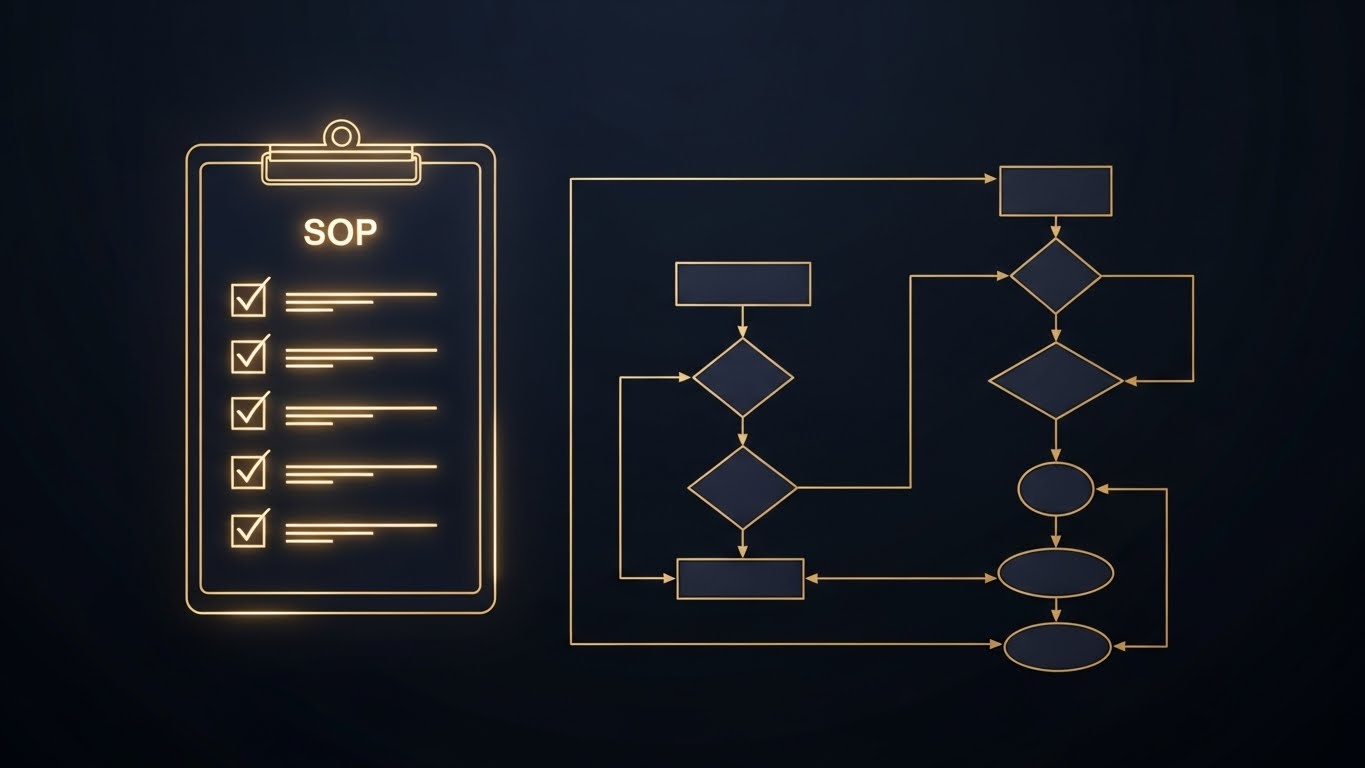
3. **Protection:** Treat these deep work blocks as sacred appointments. Decline non-essential meetings, defer interruptions, and communicate your unavailability to colleagues during these times. Integrate this into team-wide SOPs, ensuring collective respect for focused periods.
Ritualizing Transitions and Breaks
Transition rituals are crucial for mentally shifting into and out of deep work states. Before a deep work session, establish a brief, consistent routine: review your objective, gather all necessary materials, close irrelevant applications, and perhaps even perform a short mindfulness exercise. This signals to your brain that it’s time to focus. Equally important are structured breaks. Instead of mindlessly scrolling, engage in restorative activities like a 15-minute walk, light stretching, or focused breathing exercises. These active breaks prevent cognitive fatigue and improve subsequent focus. A structured break every 60-90 minutes can increase overall session effectiveness by 25%. Post-deep work, a ‘shutdown ritual’—reviewing progress, planning for the next session, and processing any pending communications—prevents work-related thoughts from spilling into personal time, ensuring mental clarity for the next day.
Leveraging AI and Automation for Deep Work Enablement
Automating Shallow Tasks with Intelligent Agents
In 2026, AI is not just a tool; it’s a strategic partner in cultivating deep work. The most immediate benefit is the automation of shallow, repetitive tasks that consume valuable cognitive bandwidth. Intelligent agents can now handle a vast array of administrative functions:
* **Email Management:** AI can triage emails, draft routine responses, summarize lengthy threads, and flag critical communications for human review, reducing inbox processing time by up to 75%.
* **Scheduling:** Advanced schedulers autonomously coordinate meetings, find optimal times, and send reminders, eliminating manual back-and-forth.
* **Data Entry & Reporting:** Robotic Process Automation (RPA) and specialized AI models extract data, populate spreadsheets, and generate standard reports with minimal human oversight, freeing up employees from tedious, error-prone tasks.
By offloading these operations, employees gain back significant blocks of time, allowing them to shift from reactive shallow work to proactive, cognitively demanding projects. This re-allocation can result in a 30% increase in time available for deep work activities.
AI-Powered Focus Tools and Distraction Management
Beyond automation, AI actively supports the maintenance of a deep work state. Modern operating systems and third-party applications integrate AI to:
* **Proactive Notification Management:** Instead of simply silencing notifications, AI can learn your work patterns and context, intelligently deferring non-urgent alerts and summarizing them for later review, or even responding automatically to low-priority queries.
* **Cognitive Load Monitoring:** Wearable tech and software interfaces can monitor biometric data (e.g., heart rate variability, eye-tracking) or digital interaction patterns to detect signs of distraction or fatigue, prompting users to take a break or suggesting a shift in task.
* **Personalized Environment Optimization:** AI can adjust ambient lighting, soundscapes, or even suggest personalized music (e.g., binaural beats) to enhance focus based on individual preferences and task requirements.
At S.C.A.L.A. AI OS, our
S.C.A.L.A. Leverage Module specifically integrates these AI capabilities, providing SMBs with a comprehensive platform to optimize operational workflows and human focus, leading to a demonstrable improvement in deep work sessions.
Measuring and Optimizing Deep Work Outcomes
Key Performance Indicators for Focused Output
To manage deep work, you must measure it. While subjective experience is valuable, objective KPIs are essential for systematic improvement. Relevant metrics include:
* **Deep Work Hours per Week:** Track the actual time spent in uninterrupted, focused blocks. Aim for 10-15 hours for knowledge workers.
* **Task Completion Rate for High-Leverage Projects:** Monitor the percentage of critical, complex tasks initiated during deep work blocks that are successfully completed or advanced significantly.
* **Quality Metrics:** For tasks like code development, design, or content creation, track relevant quality scores (e.g., bug reports, client satisfaction, peer review scores).
* **Innovation Contribution:** Measure the number of new ideas, process improvements, or strategic initiatives generated by individuals or teams post-deep work sessions.
These KPIs provide a clear, quantifiable baseline for evaluating the effectiveness of deep work protocols and identifying areas for refinement.
Feedback Loops and Continuous Improvement Cycles
Optimization is an iterative process. Implement regular feedback loops, both individual and team-based, to refine deep work strategies.
* **Individual Reflection:** At the end of each deep work block or day, prompt individuals to reflect on their focus levels, identify specific distractions encountered, and assess the quality of their output. Utilize a simple 1-5 scale for focus effectiveness.
* **Team Debriefs:** Incorporate a brief segment in weekly team meetings to discuss deep work challenges and successes. Share best practices and collective solutions.
* **Technological Audit:** Periodically review the effectiveness of focus-enhancing tools and automation strategies. Are the AI filters working optimally? Is the scheduling tool truly preventing interruptions? Adjust configurations based on empirical data.
This continuous improvement cycle
Start Free with S.C.A.L.A.