Customer Support Operations: From Analysis to Action in 7 Weeks
⏱️ 10 min de lectura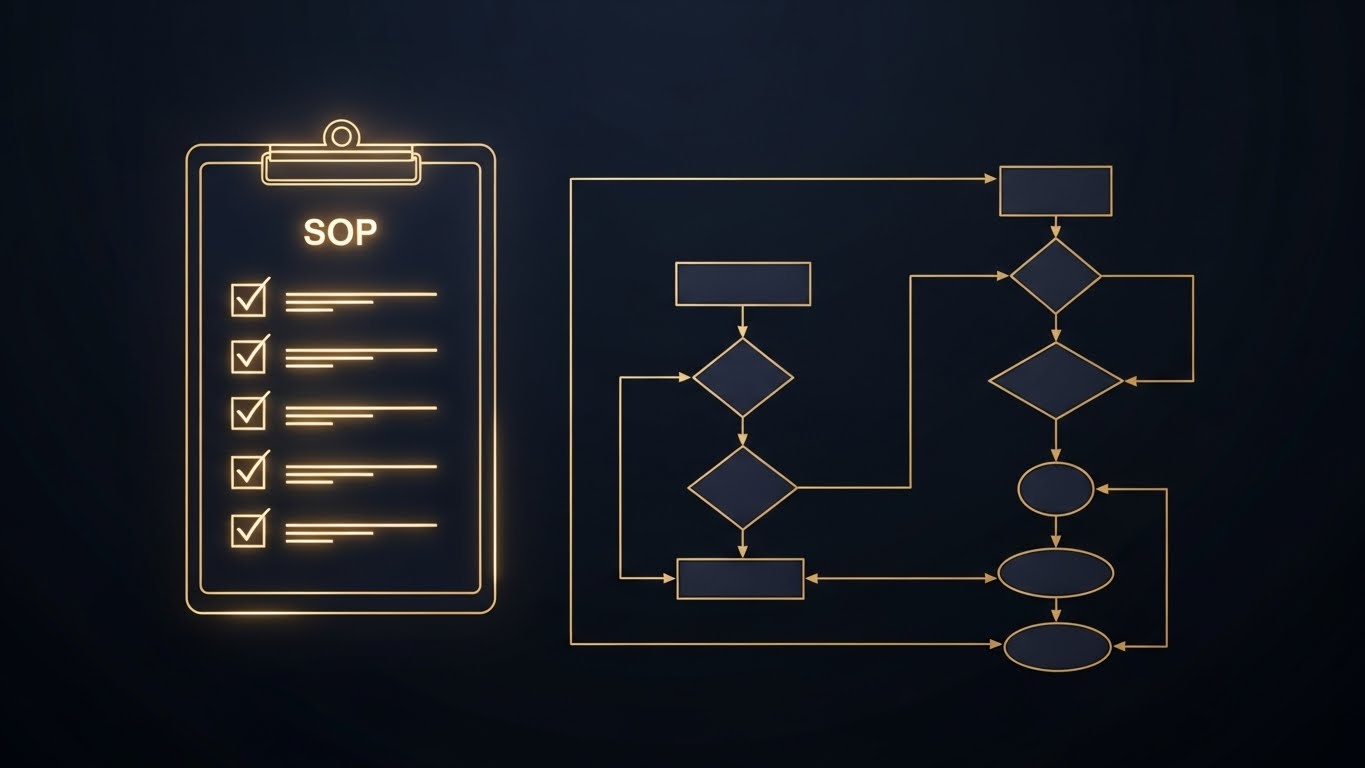
In an increasingly competitive global landscape, where product differentiation rapidly diminishes, customer support operations have transcended their traditional role as a mere cost center. By 2026, empirical data unequivocally demonstrates that a suboptimal customer experience can erode up to 15% of a company’s annual revenue, primarily through increased churn and diminished advocacy. Conversely, strategic investment in robust, AI-powered customer support operations can yield a 3x ROI within 18 months, reducing average resolution times by 40% and boosting customer lifetime value (CLTV) by 25%. This article dissects the critical components and advanced methodologies required to transform customer support into a verifiable growth engine, leveraging data-driven insights and risk-mitigation strategies.
The Strategic Imperative of Robust Customer Support Operations
Effective customer support operations are no longer a reactive necessity but a proactive strategic differentiator. Businesses failing to prioritize this function risk significant financial detriment. Data from Q4 2025 indicates that companies with CX scores in the top quartile outperform their peers in revenue growth by 1.8x. This correlation underscores the shift from viewing support as an overhead to recognizing it as an integral component of market leadership.
Shifting from Cost Center to Profit Driver
The traditional perspective on customer support as a pure cost center, primarily focused on minimizing operational expenditure (OpEx), is fiscally myopic. A modern, analytical approach redefines it as an investment generating tangible returns. By strategically integrating advanced analytics and AI, businesses can convert support interactions into opportunities for upselling, cross-selling, and gathering invaluable product feedback. For instance, an AI-driven system identifying a customer’s pain point can instantaneously recommend a relevant premium service, transforming a complaint into a conversion opportunity with a 7-10% success rate, depending on industry and product complexity. This paradigm shift requires a meticulous analysis of direct and indirect support costs against revenue contributions.
Quantifying CX Impact on LTV and Churn
The financial impact of customer experience (CX) is most acutely measured through its effect on Customer Lifetime Value (CLTV) and churn rates. A 5% improvement in customer retention can increase profits by 25% to 95%, according to Bain & Company research, a principle that remains highly relevant in 2026. Superior customer support operations directly contribute to retention by resolving issues efficiently, fostering loyalty, and building trust. Conversely, a single negative experience can increase churn probability by 50% for high-value customers. Implementing predictive analytics within the support framework allows organizations to identify at-risk customers with 85% accuracy, enabling proactive interventions that can reduce churn by 10-15%. This requires sophisticated data models that correlate interaction history, sentiment analysis, and service level agreements (SLAs) adherence with churn indicators. Quantifying this impact necessitates robust Decision Making Frameworks for attributing specific support interventions to revenue outcomes.
Leveraging AI & Automation for Operational Efficiency (2026 Perspective)
The year 2026 solidifies AI and automation as non-negotiable pillars of efficient customer support operations. These technologies extend beyond simple chatbots, permeating every facet of service delivery to enhance speed, personalization, and cost-effectiveness. The objective is to automate routine tasks, empowering human agents to focus on complex, high-value interactions that demand empathy and nuanced problem-solving.
Predictive Analytics and Proactive Support
Predictive analytics, powered by machine learning algorithms, are transforming customer support from reactive to proactive. By analyzing historical data, behavioral patterns, and real-time signals (e.g., website navigation, product usage telemetry), AI systems can anticipate customer needs or potential issues before they escalate. For instance, a SaaS platform can predict a user might encounter difficulty with a new feature update based on similar user demographics and past support tickets, then trigger a proactive in-app guide or personalized tutorial with 90% accuracy. This preemptive approach reduces inbound ticket volume by 20-30%, significantly lowering operational costs and increasing customer satisfaction by eliminating friction points before they manifest. The financial benefit is direct: fewer tickets mean lower agent labor costs and higher CSAT scores.
Hyper-personalization via Generative AI
Generative AI, particularly large language models (LLMs), has advanced to a point where it can deliver hyper-personalized support at scale. Beyond generic responses, these systems can analyze a customer’s entire interaction history, product usage, and even social media sentiment to craft contextually relevant and empathetic responses. Imagine an AI agent not only answering a technical question but also remembering a previous interaction about a billing inquiry and cross-referencing it to provide a holistic solution. This level of personalization, previously unscalable, improves first-contact resolution (FCR) rates by 15-20% and drives a significant uplift in customer loyalty. Furthermore, Generative AI assists human agents by drafting initial responses, summarizing complex ticket histories, and providing real-time knowledge base lookups, boosting agent productivity by up to 30%.
Optimizing Workforce Management and Skill Development
Even with advanced AI, the human element remains critical in customer support operations. Strategic workforce management and continuous skill development are essential to maximize agent effectiveness, reduce burnout, and ensure the delivery of high-quality, empathetic service for complex issues.
Dynamic Staffing Models and Capacity Planning
Traditional static staffing models are inefficient and costly. Dynamic staffing, leveraging AI-driven forecasting, optimizes agent scheduling based on predicted interaction volumes across various channels (phone, chat, email, social). This ensures optimal coverage during peak times and prevents overstaffing during lulls, reducing labor costs by 10-18% while maintaining target service levels (e.g., 80/20 service level – 80% of calls answered within 20 seconds). Capacity planning models must account for agent specialization, language capabilities, and proficiency in handling different issue types. Real-time dashboards provide supervisors with granular data on agent availability, skill gaps, and forecasted demand, allowing for agile adjustments. This approach minimizes average handle time (AHT) and improves agent utilization rates from 60% to 75% or higher.
Upskilling Agents for Complex Problem Resolution
As AI handles routine inquiries, human agents are increasingly tasked with complex, nuanced problems requiring higher-order cognitive skills, emotional intelligence, and specialized knowledge. Continuous upskilling programs are paramount. This involves training in areas such as advanced troubleshooting, conflict resolution, cultural sensitivity, and effective utilization of AI tools for co-pilot assistance. Investment in agent training, approximately 3-5% of the annual support budget, yields substantial returns by improving FCR rates for complex issues by 25% and reducing escalation rates by 15%. Moreover, career development pathways for agents, including specialization in specific product lines or roles as “AI trainers” for conversational agents, significantly boost agent morale and reduce attrition by 8-12%, mitigating the substantial costs associated with recruitment and onboarding.
Data-Driven Decision Making in Support Ecosystems
In 2026, the bedrock of high-performing customer support operations is an unwavering commitment to data-driven decision making. Every operational adjustment, technology investment, and training initiative must be predicated on measurable insights, moving beyond anecdotal evidence to quantifiable impact.
KPI Structures and Performance Measurement
A robust KPI framework is non-negotiable. Key metrics extend beyond traditional CSAT and FCR to include Net Promoter Score (NPS), Customer Effort Score (CES), Average Handle Time (AHT) per interaction type, Resolution Rate, Channel Containment Rate (percentage of interactions resolved within the initial channel), and Agent Utilization. Each KPI must be tied to specific business objectives – for example, a 1-point increase in NPS is correlated with a 5% revenue increase, and a 10% reduction in AHT can translate to 5-7% lower operational costs. Real-time dashboards, powered by business intelligence platforms, aggregate these metrics, enabling proactive identification of performance deviations and immediate corrective actions. Segmenting these KPIs by customer type, product line, and agent performance provides granular insights for targeted improvements.
Implementing Decision Making Frameworks for Service Enhancement
Effective data utilization requires structured decision-making frameworks. Methodologies such as Six Sigma for process improvement, ITIL for service management, and COBIT for governance provide robust frameworks for analyzing support performance data, identifying root causes of inefficiency or dissatisfaction, and implementing data-backed solutions. For instance, a persistent increase in AHT for a specific product feature might trigger a Six Sigma DMAIC (Define, Measure, Analyze, Improve, Control) project to streamline the knowledge base or enhance agent training for that feature. These frameworks ensure that decisions are not arbitrary but are based on empirical evidence, minimizing risk and maximizing the probability of successful outcomes. Regular review cycles, typically quarterly, are critical for assessing the efficacy of implemented changes and adapting strategies as market conditions or customer behaviors evolve.
Technology Stack & Procurement Strategy for Future-Proofing
The technology underpinning customer support operations is the central nervous system of service delivery. A forward-thinking procurement strategy ensures that the current tech stack is robust, scalable, and adaptable to future demands, aligning with a 2026 vision of seamless, intelligent support.
Integrating CRM, AI, and RPA Platforms
A fragmented tech stack introduces inefficiencies, data silos, and a disjointed customer experience. The modern support ecosystem demands tight integration between CRM (Customer Relationship Management) systems, AI platforms (for chatbots, sentiment analysis, predictive analytics), and RPA (Robotic Process Automation) solutions. For example, when a customer initiates a chat, the integrated system should instantly pull their full CRM profile, previous interactions, purchase history, and even sentiment scores from recent surveys. RPA can then automate backend tasks such as refund processing or account updates, reducing manual effort by 60-80% and minimizing human error. This holistic integration enhances FCR by providing agents with a 360-degree view of the customer and automating repetitive processes, significantly lowering operational costs and improving service speed. A single source of truth for customer data is paramount.
Vendor Selection and ROI Assessment
Selecting technology vendors requires a rigorous ROI assessment beyond initial procurement costs. Factors such as integration capabilities, scalability, vendor’s roadmap for AI innovation, security protocols, and total cost of ownership (TCO) over a 3-5 year horizon must be critically evaluated. A common pitfall is prioritizing lowest upfront cost over long-term strategic fit and functionality. A detailed financial model should project savings from automation, revenue uplift from improved CX, and efficiency gains in agent productivity. For instance, investing in a robust AI-powered knowledge management system might have a higher initial cost but could reduce agent training time by 40% and support deflection rates by 15%, delivering a superior long-term ROI. Pilot programs and proofs-of-concept are crucial for validating vendor claims and assessing real-world performance before full-scale deployment.
Risk Mitigation and Business Continuity in Customer Support
In an era of increasing digital dependency and geopolitical volatility, robust risk mitigation and business continuity planning for customer support operations are non-negotiable. Service disruptions can lead to immediate financial losses, reputational damage, and customer attrition.
Identifying Single Points of Failure
A comprehensive risk assessment must identify all potential single points of failure (SPOFs) across technology, processes, and human resources. This includes reliance on a single ISP, a non-redundant data center, a proprietary software vendor with limited support, or an insufficient number of agents cross-trained for critical functions. For example, a dependency on a single cloud provider for all AI services presents a significant risk; diversifying across providers or implementing failover mechanisms is essential. Process-wise, a lack of documented standard operating procedures (SOPs) for critical workflows constitutes an SPOF. Human SPOFs arise when only one or two individuals possess institutional knowledge for a vital system or function. Mitigating these risks often involves redundancy (e.g., dual ISPs, backup data centers), diversification, and cross-training initiatives that can increase operational resilience by 30-40%.
Developing Contingency Plans for Service Disruptions
Every identified risk requires a corresponding, tested contingency plan. These plans should address a range of scenarios, from minor technical glitches to catastrophic outages (e.g., natural disasters, cyberattacks). A tiered response strategy is effective:
- Level 1 (Minor): Automated system alerts, internal communication protocols, immediate team leader intervention.
- Level 2 (Moderate): Activation of secondary systems, rerouting calls/chats to alternative