How to Implement Business Process Optimization in Your Business: An Operational Guide
⏱️ 9 min read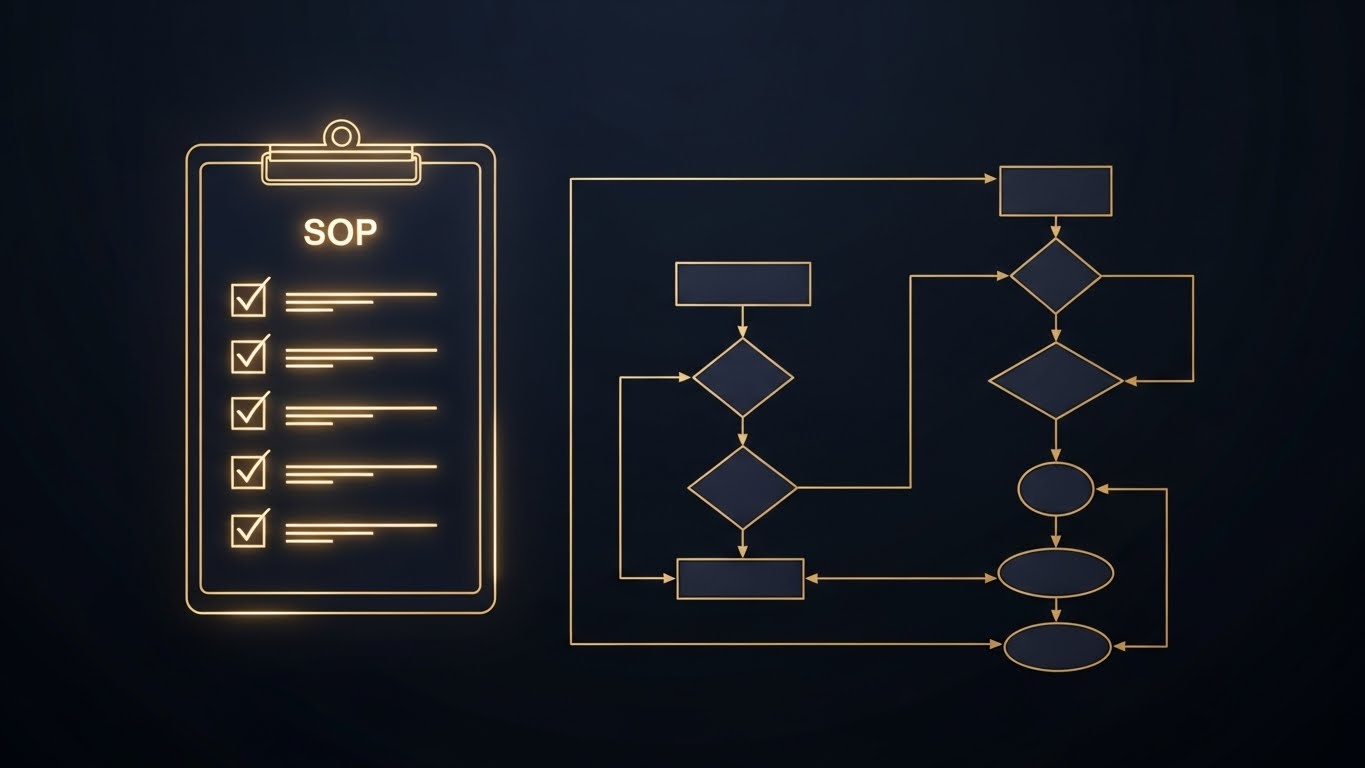
Let’s be brutally honest: your business is hemorrhaging cash. Not from visible leaks, but from the insidious, unchecked inefficiencies festering in your core operations. In 2026, if you’re not aggressively optimizing every single process, you’re not just losing market share – you’re actively setting fire to your own revenue. According to recent McKinsey data, businesses that prioritize operational excellence achieve 2x higher profit margins and 3x faster growth. The gap between those who optimize and those who don’t is no longer a gap; it’s a chasm. This isn’t theoretical; this is about your bottom line, right now.
The Revenue Drain of Suboptimal Processes
Identifying Hidden Costs: Unmasking the Profit Killers
You think you know your costs? Think again. The true cost of inefficient processes rarely appears on a standard P&L. It’s the 15% wasted employee time on manual data entry, the 20% increased customer churn due to slow service, the 10% higher operational expenditure from rework and errors. These aren’t minor inconveniences; they are direct assaults on your profitability. Without rigorous Value Stream Analysis, you’re flying blind, leaving millions on the table. We’re talking about direct impacts on gross margins, potentially reducing them by 5-10 percentage points across various industries.
The Urgency of Optimization in 2026: Adapt or Die
The competitive landscape of 2026 demands relentless efficiency. AI isn’t just a buzzword; it’s the weapon of choice for your competitors. Businesses leveraging AI for process optimization are reporting average cost reductions of 15-30% within 12 months, according to Forrester. If you’re still relying on outdated, manual workflows, you’re not just falling behind; you’re becoming obsolete. This isn’t about incremental gains; it’s about survival and aggressive expansion.
Defining Business Process Optimization: Beyond Buzzwords
What It Is: Revenue Impact First
Business Process Optimization (BPO) is the systematic, data-driven methodology for enhancing operational efficiency, reducing costs, and boosting revenue through the redesign and automation of workflows. Forget the fluffy definitions. For us, BPO means identifying bottlenecks, streamlining tasks, eliminating waste, and leveraging technology – especially AI – to achieve measurable improvements in productivity, speed, and quality that directly translate into increased profit margins and customer lifetime value. It’s about getting more output with less input, immediately impacting your financial statements.
What It Isn’t: Impatient with Theory, Obsessed with Action
BPO is NOT an academic exercise. It’s not endless meetings about “synergy” or “paradigm shifts.” It’s not a suggestion; it’s a mandate for growth. We’re not interested in whiteboard theory; we demand actionable strategies, measurable outcomes, and rapid deployment. Every initiative must have a clear, quantifiable ROI. If it doesn’t move the needle on revenue, cost reduction, or customer acquisition/retention, it’s a distraction you can’t afford.
Leveraging AI for Unprecedented Optimization Gains
Predictive Analytics and AI-driven Insights: Foresight for Profit
The days of reacting to problems are over. AI-powered predictive analytics, an integral part of modern S.C.A.L.A. Academy teachings, allows businesses to anticipate process failures, identify emerging bottlenecks, and forecast performance trends before they impact your bottom line. Imagine predicting supply chain disruptions with 90% accuracy, reducing potential losses by 25%. Or identifying customer churn risks with 85% certainty, enabling proactive retention strategies that boost revenue by 10-15%. This isn’t magic; it’s data science at scale, directly translating into preemptive profit protection and growth.
Hyperautomation and Robotic Process Automation (RPA): Scalability on Steroids
Hyperautomation, combining RPA with machine learning (ML), natural language processing (NLP), and AI, is revolutionizing BPO. Tasks that once consumed valuable human capital – invoice processing, customer service inquiries, data migration – are now automated with 99% accuracy, 24/7. Companies implementing RPA report average productivity gains of 30-50% in targeted processes and an 80% reduction in processing errors. This frees up your high-value employees to focus on strategic initiatives, driving innovation and expanding your competitive edge rather than being bogged down in repetitive, low-value work.
Data: The Non-Negotiable Foundation for BPO
Collecting Actionable Metrics: No Data, No Decisions, No Dollars
Without robust, real-time data, your optimization efforts are just guesswork. You need to identify and track Key Performance Indicators (KPIs) that directly relate to process efficiency and revenue. This includes cycle time, throughput, error rates, cost per transaction, and customer satisfaction scores. Tools integrated with AI can collect and normalize data from disparate systems, providing a unified, actionable view. A client recently reduced order fulfillment errors by 40% after implementing AI-driven data collection, leading to a 5% increase in repeat customer purchases.
Benchmarking for Competitive Advantage: Know Your Position, Then Dominate
Your BPO strategy must include aggressive benchmarking against industry leaders. Where do your processes stand compared to the top 10% in your sector? Are your lead times 2x longer? Is your customer onboarding 30% slower? AI can rapidly analyze industry benchmarks, highlighting your critical areas of underperformance. This isn’t about meeting standards; it’s about identifying where you need to leapfrog the competition to capture market share and maximize profit.
Strategic Frameworks for Aggressive Growth
Lean Six Sigma, Reimagined for the AI Era: Precision for Profit
Lean Six Sigma principles (DMAIC: Define, Measure, Analyze, Improve, Control) remain fundamentally sound for achieving process excellence. However, in 2026, their application is amplified by AI. Define: AI identifies the most costly problems. Measure: AI aggregates and analyzes process data at scale. Analyze: AI pinpoints root causes with predictive accuracy. Improve: AI simulates “what-if” scenarios for optimal solutions. Control: AI provides continuous monitoring and alerts. This isn’t your grandfather’s Six Sigma; it’s a hyper-efficient, AI-augmented framework delivering 15-25% cost reductions in specific processes.
Beyond PDCA: The S.C.A.L.A. Approach to Continuous Optimization
While Plan-Do-Check-Act (PDCA) offers a foundational loop, the S.C.A.L.A. AI OS approach elevates it to a real-time, self-optimizing engine. Our platform integrates AI to constantly monitor, analyze, and even autonomously adjust processes. This means instead of discrete improvement cycles, you have a living, breathing system that learns and adapts. We’re talking about dynamic resource allocation, automated workflow adjustments, and predictive maintenance for your processes, ensuring sustained efficiency gains that compound over time, directly impacting your ROI by up to 30% annually on operational costs.
Mapping Processes for Maximum Impact
Value Stream Analysis: Identify Bottlenecks, Unlock Cash
A non-negotiable step in effective Value Stream Analysis is visually mapping every step of a process, from customer request to delivery. This isn’t just about drawing boxes; it’s about quantifying lead times, processing times, and identifying non-value-added steps that are eating into your margins. Our clients have uncovered processes with 70% non-value-added activities, reducing them by half and boosting throughput by 20% within months. This directly accelerates cash flow.
Process Discovery with AI: Unearthing Hidden Inefficiencies
Manual process mapping is slow and prone to human bias. AI-powered process discovery tools (process mining) analyze digital footprints from your existing systems (ERP, CRM, logs) to automatically map actual workflows, identify deviations from ideal paths, and quantify the true cost of inefficiencies. This granular insight often reveals bottlenecks you didn’t even know existed, leading to targeted improvements that can cut operational costs by an immediate 10-15% by eliminating redundant steps or reassigning resources based on actual usage patterns.
Implementing Change: The Growth Leader’s Mandate
Securing Executive Buy-In with ROI: Speak the Language of Profit
Don’t talk about “better processes.” Talk about “$500,000 in annual savings” or “a 15% increase in customer lifetime value.” Executive buy-in isn’t secured with promises; it’s secured with concrete, data-backed ROI projections. Present a clear business case demonstrating how business process optimization directly impacts the balance sheet and income statement. Show them the numbers, and they’ll sign the checks. We’ve seen a direct correlation: projects with a projected 12-month ROI exceeding 20% get funded 90% of the time.
Managing Resistance: A Team Structure Imperative
Change creates resistance. Period. Address it head-on. Involve key stakeholders early. Communicate the *why* – not just for the company’s profit, but for their own job enrichment (automating repetitive tasks, enabling higher-value work). Train your teams effectively, especially on new AI tools. A well-structured change management program, integrated into your team structure, can reduce implementation delays by up to 50% and boost user adoption by 75%, ensuring your investment pays off faster.
Measuring Success: KPIs That Matter
Quantifying Efficiency Gains: No Metrics, No Progress
What gets measured gets managed. Your BPO initiatives must be tied to specific, measurable KPIs. Are you tracking cycle time reduction? Error rate decrease? Throughput increase? Cost per unit produced/served? A client recently reduced their customer service resolution time by 35% using AI-driven routing, leading to a direct 10% increase in customer satisfaction scores and a 7% reduction in operational costs. These are the numbers that matter.
Direct Impact on Profit Margins: The Ultimate KPI
Ultimately, every BPO effort must circle back to profit. Did the process change reduce operational expenditure? Did it boost sales conversion rates? Did it improve customer retention, leading to higher recurring revenue? Connect the dots directly. If a process improvement doesn’t improve your profit margins or accelerate revenue growth within a reasonable timeframe, it’s not optimization; it’s busywork. We advocate for a maximum 18-month payback period for major BPO investments.
Continuous Improvement: The Only Sustainable Play
Real-time Monitoring with AI Dashboards: Always On, Always Optimizing
BPO isn’t a one-and-done project; it’s an ongoing commitment. AI-powered dashboards provide real-time visibility into process performance, allowing you to identify deviations, anticipate issues, and take corrective action instantly. Imagine a dashboard flagging a sudden 5% drop in fulfillment speed, allowing you to intervene before it impacts 100s of customer orders and damages your brand reputation. This proactive stance protects revenue and ensures consistent operational excellence.
Iterative Optimization Cycles: Relentless Pursuit of Perfection
Adopt an iterative approach. Implement changes, measure results, learn, and refine. Small, frequent improvements, guided by AI insights, often yield more significant cumulative gains than infrequent, large-scale overhauls. This continuous feedback loop ensures your processes remain agile, competitive, and consistently aligned with your revenue growth objectives. Aim for quarterly process reviews and optimization sprints, targeting 2