Advanced Guide to ADKAR Model for Decision Makers
⏱️ 9 min read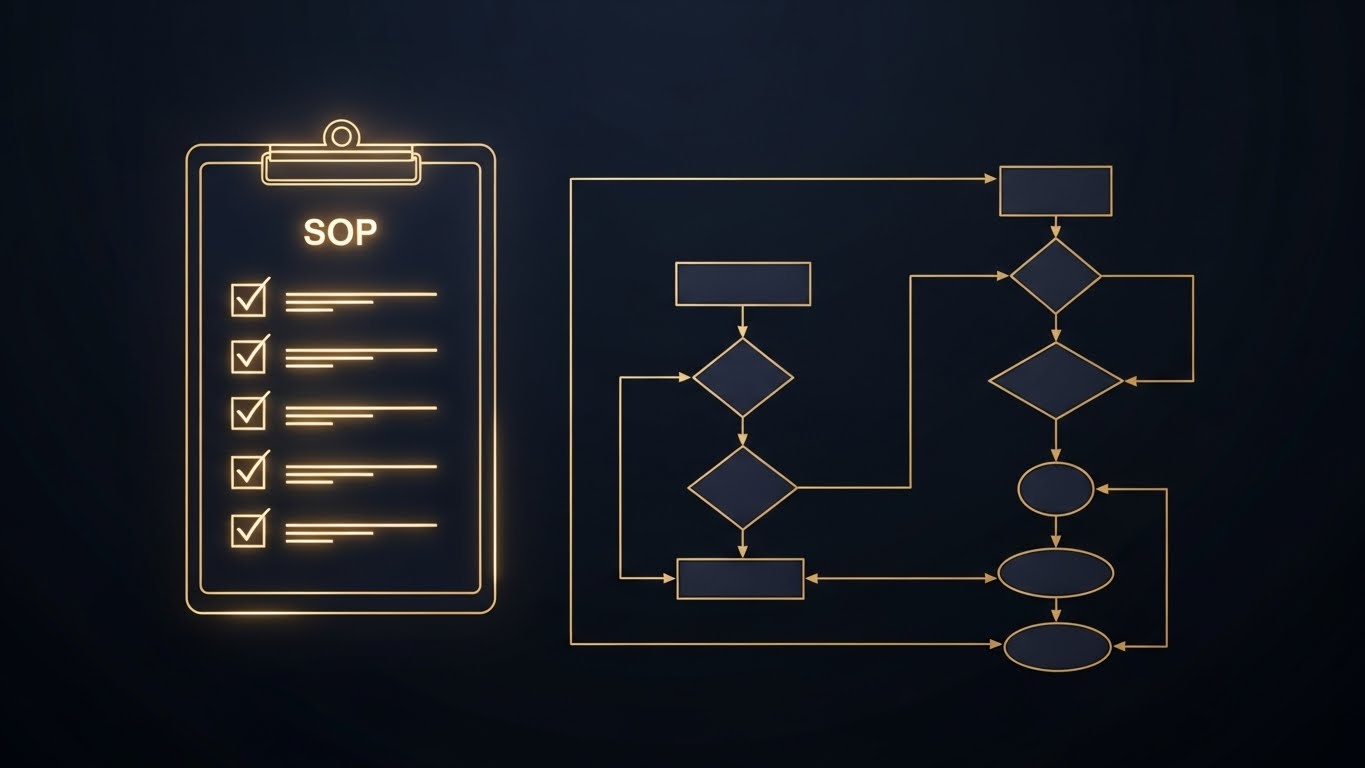
Understanding the ADKAR Model: A Foundation for Operational Excellence
The **ADKAR model**, developed by Prosci, is fundamentally a goal-oriented change management model that guides individual change. For an Operations Manager, its value lies in providing a diagnostic framework to identify where individuals are struggling in a change process, thereby enabling targeted interventions. It’s an indispensable tool for ensuring that process optimizations, AI deployments, or new system integrations actually stick, moving beyond theoretical implementation to tangible, sustained operational efficiency.
The Imperative of Structured Change in 2026
The current operational landscape, dominated by rapid technological shifts and fierce competition, demands an unprecedented level of adaptability. Without a structured approach like the **ADKAR model**, organizations introducing AI-powered process mapping or automated workflows risk significant user resistance, underutilization of new systems, and ultimately, a negative ROI on innovation. Consider the 2025 Gartner prediction that by 2028, 75% of enterprises will have adopted generative AI in their operations; failure to prepare human capital for this shift guarantees friction.
Deconstructing ADKAR: The Five Pillars
ADKAR is an acronym for five sequential outcomes an individual must achieve for change to be successful:
- Awareness: Understanding the need for change.
- Desire: The personal choice to support and participate in the change.
- Knowledge: How to change, including training and information.
- Ability: The demonstrable capacity to implement new skills and behaviors.
- Reinforcement: Measures to sustain the change over time.
Each element is critical. Skipping one, or mismanaging its execution, will invariably lead to bottlenecks and eventual project failure. Our systematic approach at S.C.A.L.A. AI OS integrates these pillars into every deployment, ensuring maximum user adoption and sustained performance gains.
Awareness: The Critical First Step in AI Transformation
Without a clear and compelling “why,” any change initiative is dead on arrival. Awareness is not merely broadcasting an announcement; it’s about building a robust understanding of the business drivers behind the change, the risks of not changing, and the potential benefits. In the context of AI adoption, this means articulating how new algorithms or automation tools will directly impact existing workflows and, critically, individual roles.
Communicating the “Why” with Precision
Effective awareness campaigns must be data-driven and tailored. Instead of generic statements, quantify the problem: “Our current manual data entry process leads to a 15% error rate and consumes 200 person-hours weekly. AI automation will reduce errors to less than 1% and free up 150 hours for strategic tasks.” This level of specificity transforms vague mandates into clear, justifiable necessities. Utilize existing communication channels – team meetings, internal newsletters, and dedicated workshops – but ensure messages are consistent and delivered by credible leadership. A key principle here is transparency: address potential anxieties about job displacement head-on, focusing on role evolution and skill augmentation rather than elimination.
Leveraging Data for Impactful Awareness Campaigns
In the S.C.A.L.A. AI OS ecosystem, we emphasize using our business intelligence capabilities to generate the precise data needed to fuel awareness. Showcase current inefficiencies using dashboards depicting bottlenecks, resource consumption, and error rates. Project the quantifiable benefits of the new system: anticipated reduction in processing time by 30%, increase in data accuracy by 95%, or a 25% improvement in customer response times. Visualizing these metrics creates an undeniable case for change, transforming abstract concepts into tangible, measurable improvements that resonate with every stakeholder.
Desire: Cultivating Buy-in for Process Innovation
Awareness without desire is academic. Desire is the personal choice to support the change and engage in the new way of working. This is often the most challenging ADKAR element because it deals with individual motivation, which is inherently complex. For an Operations Manager, the objective is to create an environment where participation is not just expected, but actively sought after.
Incentivizing Adoption in a Data-Driven Culture
Building desire requires a multifaceted approach that goes beyond mere compensation. While financial incentives can play a role, focus on intrinsic motivators. Highlight how the new AI tool will reduce monotonous tasks, enhance job satisfaction, or provide opportunities for upskilling and career advancement. For instance, demonstrate how an employee currently spending 4 hours a day on repetitive data reconciliation can now leverage a S.C.A.L.A. AI OS module to automate 80% of that, freeing them to focus on analytical or customer-facing roles. Publicly recognize early adopters and champions of the new system. Implement a “gamification” element where teams or individuals achieve milestones related to adoption, with progress visible on a shared dashboard.
Addressing Resistance Systematically
Resistance is a natural human response to change. Ignoring it is detrimental; addressing it systematically is crucial. Establish clear feedback channels – anonymous suggestion boxes, regular Q&A sessions, and designated change agents – to capture concerns. Categorize resistance (e.g., lack of understanding, fear of job loss, belief that the current system is superior). Develop targeted counter-arguments or solutions for each category. For a manager resistant to a new reporting AI, demonstrate how it will generate insights 5x faster, allowing more strategic decision-making and less time spent on manual report compilation. This proactive, data-informed approach, mirroring Lean Management principles, defuses opposition before it escalates.
Knowledge: Equipping Your Workforce for the AI Era
Once individuals understand *why* the change is necessary and *desire* to participate, they need the *knowledge* of how to perform in the new environment. In the context of advanced AI systems, this means providing comprehensive, accessible, and practical training that covers both the theoretical understanding and the hands-on application of new tools and processes.
Designing Scalable Training Programs
Traditional, one-off training sessions are insufficient for complex AI systems. Implement a blended learning approach:
- Self-Paced Modules: Online courses covering basic concepts, accessible 24/7.
- Interactive Workshops: Hands-on sessions led by subject matter experts, focusing on practical application.
- Peer Mentorship: Pair experienced users with new learners to facilitate knowledge transfer.
- Resource Library: A centralized repository of user manuals, FAQs, and video tutorials.
Integrating AI Tools with Standard Operating Procedures
Knowledge becomes practical only when it’s integrated into daily work. Review and update all relevant Standard Operating Procedures (SOPs) to reflect the new AI-driven workflows. Embed screenshots, flowcharts, and specific instructions for interacting with the new systems directly within the SOPs. This eliminates ambiguity and ensures consistency. For example, an SOP for order processing should now include steps on how to use the AI-powered order validation tool, specifying input fields, expected outputs, and error handling protocols. This ensures that the ‘how-to’ is readily available at the point of need, reducing reliance on memory and boosting operational accuracy.
Ability: Translating Learning into Actionable Performance
Knowledge alone does not guarantee performance. Ability is the practical application of new skills and behaviors. It’s the moment when an employee moves from understanding a concept to flawlessly executing it under pressure. This stage often requires individualized coaching, practice, and the removal of practical barriers.
Bridging the Gap from Theory to Practical Application
Provide ample opportunities for practice in a low-stakes environment. Sandbox instances of new AI tools, simulations, or controlled pilot projects allow users to experiment without fear of impacting live operations. Observe users, identify common sticking points, and provide immediate, constructive feedback. For example, if an operations analyst is struggling with the complex query syntax in a new S.C.A.L.A. AI OS analytics module, offer one-on-one coaching focused on practical query construction for their specific use cases. The goal is to build confidence through repeated, successful application. Ensure access to dedicated support teams during the initial rollout phase – a 24/7 helpdesk or designated internal experts who can swiftly troubleshoot issues and provide real-time guidance.
Performance Monitoring and Feedback Loops
To confirm ability, robust performance monitoring is essential. Utilize metrics that directly reflect the adoption and effective use of the new systems. Track login rates, feature utilization, time-to-completion for tasks using the new system, and error rates. Compare these against pre-change benchmarks. For instance, if an AI automates invoice reconciliation, monitor the number of invoices processed, the accuracy rate, and any manual interventions still required. Establish regular, structured feedback sessions – weekly check-ins, monthly performance reviews – where managers can provide targeted coaching and employees can voice challenges. This data-driven approach, similar to the iterative improvements in process mapping, allows for continuous refinement of support mechanisms.
Reinforcement: Sustaining Change and Continuous Improvement
The final, and often overlooked, element of the **ADKAR model** is Reinforcement. Without it, employees can revert to old habits, eroding all previous gains. Reinforcement involves establishing mechanisms to ensure the change is sustained over time, becoming the new normal rather than a temporary deviation.
Establishing Perpetual Feedback Mechanisms
Reinforcement is not a one-time event; it’s an ongoing process. Implement systems for continuous feedback from users, identifying areas where the new process or AI tool could be improved. This could be through recurring surveys, dedicated forums, or regular “lessons learned” meetings. Act on this feedback promptly, demonstrating that user input is valued and contributes to the system’s evolution. Acknowledge and reward individuals and teams who consistently demonstrate the new behaviors and achieve success with the new tools. This could be through formal recognition programs or informal shout-outs in team meetings. Celebrate milestones – “Achieved 99% data accuracy with the new AI for three consecutive months!” – to embed the change as a positive, collective achievement.
The Role of Lean Management Principles in Sustaining Change
Integrating Lean Management principles, such as continuous improvement (Kaizen) and waste reduction, is paramount for sustaining change. Regularly audit the new processes to identify inefficiencies that may have emerged post-implementation. Utilize S.C.A.L.A.’s AI OS S.