🟢 EASY
💰 Quick Win
Process Analyzer
8 Ways to Improve Escalation Procedures in Your Organization
⏱️ 8 min read
In 2026, the velocity of business is relentless. A single critical issue, left unaddressed or mishandled, can spiral into a catastrophic operational failure, eroding trust and revenue at an alarming rate. Data shows that companies without clearly defined and actionable
escalation procedures experience, on average, a 40% longer resolution time for critical incidents, directly impacting customer satisfaction by up to 25% and incurring significant financial penalties. This isn’t theoretical; I’ve seen promising SMBs falter not from lack of innovation, but from paralysis when faced with unexpected crisis. Effective escalation isn’t a luxury; it’s the operational bedrock of resilience and growth in our hyper-connected, AI-driven economy.
The Imperative of Strategic Escalation in 2026
The landscape has shifted dramatically. The sheer volume and complexity of data, coupled with the speed of digital interactions, means that traditional, manual escalation paths are simply inadequate. We’re past the point where a simple “call the manager” suffices. Today, a robust escalation framework must be intelligent, predictive, and integrated, acting as an early warning system rather than a last resort. Your business isn’t just competing on product or service; it’s competing on agility and responsiveness.
The Cost of Inaction: Lost Revenue & Reputation
Consider a mission-critical system outage. Without clear escalation procedures, teams waste precious minutes, if not hours, trying to identify who owns the problem, who has the authority to approve a fix, and what the next steps are. For an e-commerce platform, every minute of downtime can cost thousands, even tens of thousands, of dollars. For a SaaS provider, an unresolved bug can lead to mass customer churn and irreparable damage to brand reputation. In my early days building S.C.A.L.A., we experienced a critical server failure. Because we had meticulously documented
escalation procedures, we brought the system back online within 17 minutes, minimizing impact. Without them, that would have been 17 *hours* – a business-ending event. Studies indicate that 85% of critical issues that lack a defined escalation path result in a direct revenue loss of at least 5% over the subsequent quarter due to churn or missed opportunities.
Proactive vs. Reactive: AI’s Role in Early Warning
The true power of modern escalation lies in its ability to be proactive. In 2026, AI-powered business intelligence allows us to move beyond merely reacting to problems. We can identify potential issues before they manifest as full-blown crises. Think of it as an enterprise-wide nervous system, constantly monitoring vital signs and flagging anomalies. This shift from reactive problem-solving to proactive risk mitigation is where real competitive advantage is forged.
Defining and Structuring Effective Escalation Procedures
An effective escalation procedure is a meticulously engineered workflow, not a vague guideline. It’s built on clear triggers, defined roles, and measurable outcomes. It should align seamlessly with your overall
Project Management methodologies and operational protocols.
Tiers of Urgency and Authority
Most successful organizations adopt a tiered approach to escalation, typically three to four levels, mapping problem severity to the required level of expertise and authority.
*
Level 1 (Initial Support): Frontline teams, often equipped with AI assistants for common queries. Their goal is rapid resolution of known issues within a defined time (e.g., 15-30 minutes). If resolution isn’t possible, or if the issue falls outside their scope, it escalates.
*
Level 2 (Specialist/Technical Support): Teams with deeper technical or domain-specific expertise. They handle more complex problems, requiring specialized tools or knowledge. Their resolution time targets are longer but still constrained (e.g., 2-4 hours).
*
Level 3 (Management/Senior Experts): For critical, high-impact issues affecting multiple customers or core business functions. This level often involves senior engineers, product managers, or department heads. Decision-making authority here is broader, focusing on impact mitigation and long-term solutions.
*
Level 4 (Executive/Crisis Management): Reserved for truly catastrophic events—systemic failures, major security breaches, or reputational crises. This involves C-suite executives, legal teams, and PR, with a focus on business continuity and strategic communication.
Each tier must have explicit entry and exit criteria, along with defined maximum resolution times before automatic escalation to the next level. This prevents issues from languishing.
Vagueness is the enemy of efficiency. Every potential escalation point must have a clearly assigned owner and defined decision rights. A RACI matrix (Responsible, Accountable, Consulted, Informed) is an invaluable tool here. It removes ambiguity and empowers individuals to act decisively. Without clear
decision rights, even highly capable teams can become paralyzed, waiting for consensus that may never arrive. I once advised a promising startup that imploded because no one was empowered to make a critical pivot decision during a market downturn. The CEO, despite being technically “in charge,” hadn’t delegated sufficient autonomy to his product leads, leading to analysis paralysis and missed opportunities. Define who makes the call, under what circumstances, and with what authority.
Leveraging AI and Automation for Proactive Escalation
This is where S.C.A.L.A. AI OS fundamentally changes the game. Traditional escalation is reactive; AI-powered escalation is predictive and autonomous, transforming the entire incident management lifecycle.
Predictive Analytics and Anomaly Detection
AI algorithms, trained on historical data, can identify subtle patterns and deviations that signal an impending problem long before it becomes obvious to human operators. Imagine an AI system monitoring server load, database performance, and user interaction metrics across your SaaS platform. It detects a gradual, statistically significant increase in API latency in a specific region, combined with a slight rise in database connection errors. This isn’t yet a “failure,” but it’s an anomaly. The AI, via our
S.C.A.L.A. Leverage Module, can interpret this pattern, predict a potential outage within the next 30 minutes with 90% confidence, and automatically trigger a Level 2 escalation to the relevant engineering team *before* customers even notice an issue. This reduces critical incident rates by up to 30% and significantly improves Mean Time To Resolve (MTTR).
Automated Workflow Triggers
Once an escalation is triggered, AI and automation streamline the entire process. This includes:
*
Automated Notifications: Instant alerts via multiple channels (Slack, email, SMS) to the appropriate individuals or teams, ensuring no time is lost.
*
Automated Ticket Creation and Prioritization: Tickets are automatically generated in your helpdesk system (e.g., Jira, ServiceNow), populated with all relevant diagnostic data, and assigned the correct priority based on AI assessment.
*
Automated Diagnostic Steps: For common issues, AI can initiate preliminary diagnostic scripts or data collection, providing the escalated team with critical information upfront.
*
Automated Resource Allocation: In some advanced scenarios, AI can even suggest or provision additional resources (e.g., scaling up cloud servers) to mitigate impact while human teams investigate.
This automation dramatically reduces human error, slashes response times, and frees up valuable human capital to focus on complex problem-solving rather than administrative tasks.
Implementing and Communicating Escalation Frameworks
A perfectly designed escalation procedure is useless if it’s not understood, embraced, and consistently applied by your team. Implementation is as much about culture as it is about documentation.
Training and Culture
Regular, mandatory training sessions are non-negotiable. These shouldn’t be passive lectures; they should involve simulations, tabletop exercises, and role-playing scenarios. Teams need to practice escalating issues under pressure, understanding their roles, and knowing exactly what information to provide at each stage. Foster a culture where escalating an issue is seen as a responsible act, not a sign of failure. Encourage transparency and learning from every incident, regardless of outcome. I insist on bi-annual escalation drills at S.C.A.L.A. AI OS; it keeps everyone sharp and reinforces critical pathways. This investment in training can reduce critical incident misrouting by 15-20%.
Documentation and Accessibility
All escalation procedures must be meticulously documented and easily accessible to every team member. This documentation should be:
*
Centralized: A single source of truth, integrated into your knowledge base or
Project Management platform.
*
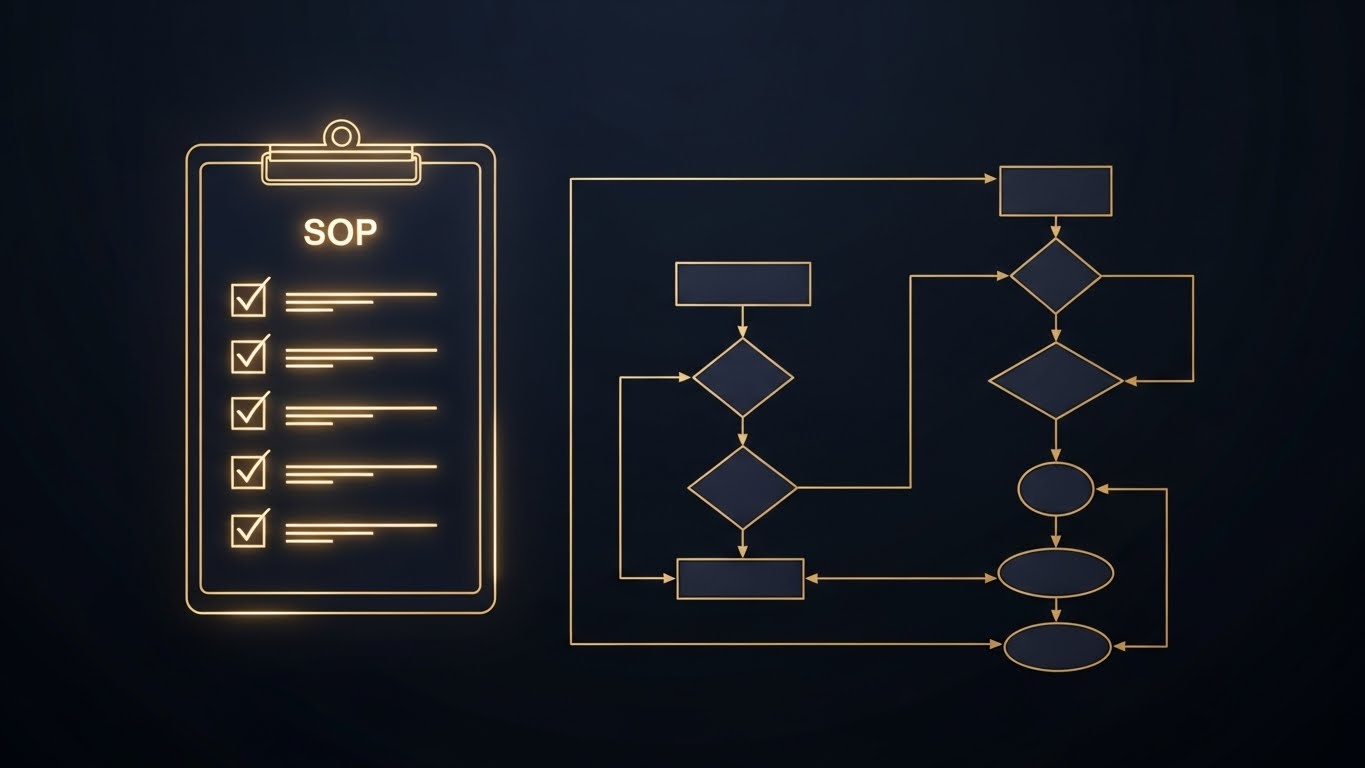
Clear and Concise: Use flowcharts, decision trees, and bullet points rather than dense prose.
*
Actionable: Every step should describe an action, not just a concept.
*
Up-to-Date: Regularly reviewed and updated, especially after post-incident analyses or significant operational changes. Outdated documentation is worse than no documentation.
Measuring and Optimizing Escalation Performance
You cannot manage what you do not measure. Robust
escalation procedures demand continuous performance monitoring and iterative refinement.
Key Performance Indicators (KPIs) for Escalation
To truly understand the effectiveness of your escalation procedures, track these critical KPIs:
*
Mean Time To Acknowledge (MTTA): The average time from issue detection to initial acknowledgment by the responsible team. Aim for minutes, not hours.
*
Mean Time To Resolve (MTTR): The average time from issue detection to full resolution. A crucial metric for customer satisfaction.
*
Escalation Rate: The percentage of issues that require escalation beyond Level 1. A high rate might indicate insufficient Level 1 training or a recurring, unresolved problem.
*
False Escalation Rate: The percentage of issues escalated unnecessarily or to
Start Free with S.C.A.L.A.