Advanced Guide to Compliance Management for Decision Makers
⏱️ 11 min read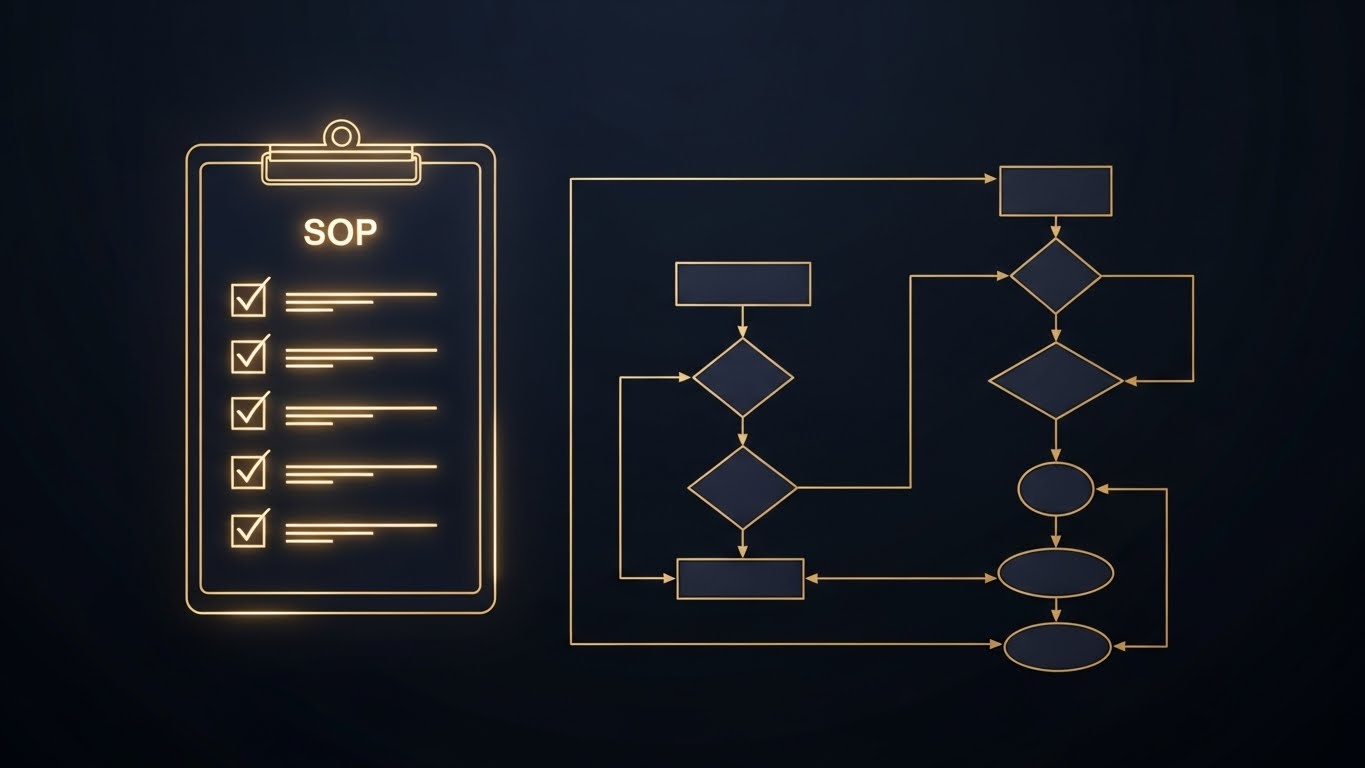
In 2026, the cost of reactive compliance isn’t just a financial burden; it’s an existential threat. Consider this: a recent PwC study projected that regulatory fines globally could exceed $500 billion annually by 2030 if current trends persist, with 40% of organizations experiencing a material compliance incident in the past three years. This isn’t merely about avoiding penalties; it’s about operational resilience, market reputation, and sustained viability. For Small and Medium-sized Businesses (SMBs), where resources are finite, a systematic, proactive approach to compliance management is not a luxury, but a non-negotiable operational mandate. Our focus at S.C.A.L.A. AI OS is on transforming this imperative into an optimized, AI-driven process, ensuring your enterprise navigates the increasingly complex regulatory landscape with surgical precision.
The Imperative of Proactive Compliance in 2026
The regulatory environment is no longer static; it is a dynamic, hyper-evolving ecosystem. Relying on annual audits or post-incident remediation is akin to navigating a minefield with a blindfold. In 2026, proactive compliance management, integrated deeply into operational workflows, is the only viable strategy. It shifts the paradigm from damage control to predictive risk mitigation, ensuring continuous adherence rather than intermittent checks.
Escalating Regulatory Landscapes and AI’s Role
Regulations, spanning data privacy (GDPR 2.0, CCPA enhancements), environmental, social, and governance (ESG) standards, and industry-specific mandates (e.g., FinTech, HealthTech), are expanding in scope and complexity. The average SMB now contends with 10-15 major regulatory frameworks, a 25% increase over the past five years. Manual tracking of these changes is unsustainable, prone to error, and resource-intensive. AI, particularly Natural Language Processing (NLP) and Machine Learning (ML), is critical here. AI systems can now monitor regulatory updates across hundreds of jurisdictions in real-time, interpret their implications, and even draft preliminary policy adjustments. This reduces the human effort by an estimated 70% in intelligence gathering alone, allowing compliance teams to focus on strategic implementation rather than arduous research.
The Cost of Non-Compliance: Quantified Risks
The financial penalties for non-compliance are severe, often reaching 2-4% of global annual turnover for major data breaches (e.g., GDPR fines). Beyond direct fines, there are significant indirect costs: reputational damage, loss of customer trust, operational disruptions, increased audit scrutiny, and legal fees. For an SMB with an average annual revenue of $10 million, a single material breach could incur direct fines of $200,000 to $400,000, compounded by a 15-20% loss in customer base over the subsequent two years. Implementing a robust compliance management system is an investment with a demonstrably high ROI, often preventing losses that far exceed the system’s cost.
Establishing a Robust Compliance Management Framework
A resilient compliance framework is the architectural blueprint for sustained regulatory adherence. It’s not a standalone department but an integrated operational layer that permeates all business functions. This requires meticulous planning, clear accountability, and structured processes.
Defining Scope and Stakeholder Accountability
The initial step involves a comprehensive risk assessment to identify all applicable regulations, internal policies, and contractual obligations. This assessment must encompass all operational areas, from HR to IT to supply chain. Once identified, assign clear ownership for each compliance domain. We advocate for the use of a RACI Matrix (Responsible, Accountable, Consulted, Informed) to delineate roles and responsibilities with surgical precision. For instance, the IT Manager might be Responsible for firewall configurations, the CISO Accountable for overall cybersecurity compliance, Legal Consulted on data privacy impacts, and the Board Informed of critical breaches. This minimizes ambiguity and ensures every critical compliance task has a designated owner.
Policy Development and Granular Process Mapping
Once responsibilities are clear, develop or refine policies that translate regulatory requirements into actionable internal directives. These policies must be precise, unambiguous, and readily accessible. Beyond policies, every compliance-related process must be mapped in granular detail. For example, a “new vendor onboarding” process must explicitly include steps for due diligence, contract review (with compliance clauses), and ongoing monitoring. Document these processes in Standard Operating Procedures (SOPs) that specify triggers, actions, roles, and required evidence. This systematic approach ensures consistency, reduces human error, and provides a clear audit trail.
Leveraging AI for Predictive Risk & Anomaly Detection
The era of static compliance checks is over. AI and machine learning are transforming compliance management from a reactive chore into a proactive, intelligent defense system. Predictive capabilities are no longer futuristic concepts; they are operational realities in 2026.
Real-time Monitoring and Automated Alerting
Modern compliance systems, powered by AI, continuously monitor vast datasets across an organization’s digital footprint: transaction logs, communication channels, network activity, and internal system configurations. These AI engines establish baselines of “normal” behavior. Any deviation that indicates potential non-compliance – such as an unauthorized data access attempt, a policy violation in an email communication, or a login from an unusual geographic location – triggers an immediate, automated alert. This drastically reduces detection time from weeks to minutes, allowing for rapid containment and remediation. For example, an AI could flag 95% of phishing attempts targeting sensitive data, significantly reducing the human error component in cybersecurity compliance.
Predictive Analytics for Emerging Threats
Beyond real-time anomaly detection, advanced AI systems utilize predictive analytics to anticipate future compliance risks. By analyzing historical breach data, industry trends, regulatory changes, and even geopolitical shifts, AI algorithms can identify emerging threat vectors or regulatory shifts before they fully materialize. This allows organizations to adapt their policies and controls preemptively. For instance, an AI might predict a heightened risk of insider trading based on employee behavior patterns and market volatility, or forecast a new data residency requirement for cloud services in a specific region, enabling proactive infrastructure adjustments. This capability is invaluable for maintaining a future-proof compliance posture.
Streamlining Compliance Workflows with Automation
Automation is the engine that drives efficiency in compliance. By automating repetitive, rule-based tasks, organizations can free up valuable human capital, reduce errors, and ensure consistency across all compliance activities.
Automated Documentation and Audit Trail Generation
Manual documentation for audits is a notorious time sink. Automation tools can automatically capture, timestamp, and store evidence of compliance activities: policy acknowledgments, training completions, system configurations, and incident responses. This creates an immutable, tamper-proof audit trail that is always ready for review. For example, when an employee completes a mandatory data privacy training module, the system automatically records their completion, date, and score, storing it in an accessible repository. This reduces audit preparation time by up to 60% and significantly enhances audit defensibility.
Workflow Orchestration and Task Management
Complex compliance processes often involve multiple stakeholders, approvals, and deadlines. Automation platforms orchestrate these workflows, ensuring tasks are assigned, executed, and tracked systematically. This includes automated reminders for policy reviews, scheduled control tests, and regulatory reporting deadlines. If a task isn’t completed on time, escalation protocols are automatically triggered, notifying relevant managers. This ensures no critical compliance step is missed due to oversight. Imagine a system where a new regulatory update automatically triggers a task for the legal team to review, then for the IT team to implement technical controls, all tracked and managed within a single platform.
Continuous Improvement via Data-Driven Insights
Compliance is not a destination but a continuous journey of refinement. To optimize this journey, data-driven insights are paramount. Without robust metrics and iterative feedback, even the most advanced systems can stagnate.
Performance Metrics and Key Risk Indicators (KRIs)
To measure the effectiveness of your compliance program, establish clear performance metrics. These could include the number of policy violations detected per month, average time to resolve a compliance incident, training completion rates, or audit findings per quarter. Equally important are Key Risk Indicators (KRIs), which provide early warnings of potential compliance failures. Examples include unusual spikes in data access attempts, a decline in employee engagement with compliance training, or an increase in unapproved software installations. Regularly tracking these metrics (e.g., weekly dashboards, monthly reports) allows for immediate identification of deteriorating controls or emerging risks, enabling proactive intervention.
Iterative Process Refinement and Feedback Loops
Data from performance metrics and KRIs should feed directly into an iterative process refinement cycle. Conduct quarterly reviews of compliance processes, leveraging incident reports, audit findings, and stakeholder feedback to identify areas for improvement. For example, if a particular policy consistently leads to violations, it may indicate a need for clearer communication or a revised procedure. Implement a structured feedback loop, perhaps utilizing an Knowledge Management system, to capture lessons learned and best practices. This ensures that the compliance framework continuously evolves, adapting to new risks and optimizing its efficiency over time. Aim for a 5% year-over-year reduction in compliance-related incidents through continuous improvement.
Training & Culture: Human-Centric Compliance
Even with advanced AI and automation, the human element remains critical. A compliance program is only as strong as the weakest link in its human chain. Cultivating a robust compliance culture is as essential as implementing sophisticated technology.
Standardized Training Protocols and Efficacy Measurement
Effective compliance starts with well-informed employees. Implement standardized, mandatory training modules for all staff, covering relevant policies, regulatory requirements, and ethical conduct. Utilize modern e-learning platforms that incorporate interactive elements, scenario-based learning, and regular assessments to enhance engagement and retention. Crucially, measure the efficacy of this training beyond simple completion rates. Track post-training quiz scores, observe changes in reported compliance behaviors, and solicit feedback. For example, if 80% of employees score above 90% on data privacy quizzes, it indicates strong comprehension. This data informs improvements to training content and delivery, ensuring its continued relevance and impact.
Fostering a Culture of Compliance
Beyond formal training, foster an organizational culture where compliance is viewed not as a burden, but as a shared responsibility and a fundamental aspect of ethical business conduct. Encourage open communication, providing secure channels for employees to report concerns or ask questions without fear of reprisal. Utilize Async Communication tools to disseminate compliance updates and best practices regularly, reinforcing key messages. Leaders must visibly champion compliance, integrating it into performance reviews and reward structures. When 90% of employees understand the “why” behind compliance rules, not just the “what,” adherence rates significantly improve, reducing the likelihood of incidents.
Third-Party & Supply Chain Compliance
In today’s interconnected business environment, your compliance risk extends far beyond your immediate organizational boundaries. Third-party vendors and supply chain partners represent significant vectors for regulatory exposure.
Vendor Vetting and Contractual Safeguards
Before engaging any third party, conduct thorough due diligence. This includes assessing their financial stability, cybersecurity posture, data handling practices, and adherence to relevant regulatory frameworks. Utilize a risk-based approach, subjecting vendors handling sensitive data or critical operations to more rigorous scrutiny. Ensure all contracts include robust compliance clauses, such as data protection agreements (DPAs), audit rights, incident reporting requirements, and clear termination clauses for non-compliance. Implement a tiered system: high-risk vendors (e.g., cloud providers) require an annual audit and a 50-point compliance checklist, while low-risk vendors (e.g., office suppliers) may only require a basic questionnaire.
Continuous Monitoring of External Entities
Compliance with third parties is not a one-time event. Establish mechanisms for ongoing monitoring. This could involve regular security assessments, performance reviews against contractual SLAs, and automated alerts for negative news or changes in a vendor’s regulatory standing. AI-powered platforms can continuously scan public records and dark web forums for information related to your vendors, flagging potential risks such as data breaches or sanctions violations. This continuous vigilance reduces the likelihood of “shadow IT” or unmanaged third-party risks, which account for over 60% of external breaches in 2025.
The S.C.A.L.A. AI OS Approach to Enhanced Compliance
At S.C.A.L.A. AI OS, we understand that traditional compliance methods are insufficient for the demands of 2026. Our platform is engineered to transform your compliance challenges into optimized, manageable processes, leveraging advanced AI to deliver unparalleled efficiency and oversight.
Centralized Intelligence and Actionable Recommendations
S.C.A.L.A. AI OS centralizes all your compliance data, from regulatory mandates to internal policies, audit trails, and risk assessments. Our AI engine then processes this vast intelligence, identifying overlaps, gaps, and potential areas of non-compliance. It doesn’t just present data; it delivers actionable recommendations. For instance, our S.C.A.L.A. Leverage Module can analyze a new data privacy regulation, identify impacted departments, suggest specific policy updates, and even generate preliminary task lists for implementation. This proactive intelligence drastically