🟢 EASY
💰 Quick Win
Process Analyzer
Why Process Mapping Is the Competitive Edge You’re Missing
⏱️ 8 min read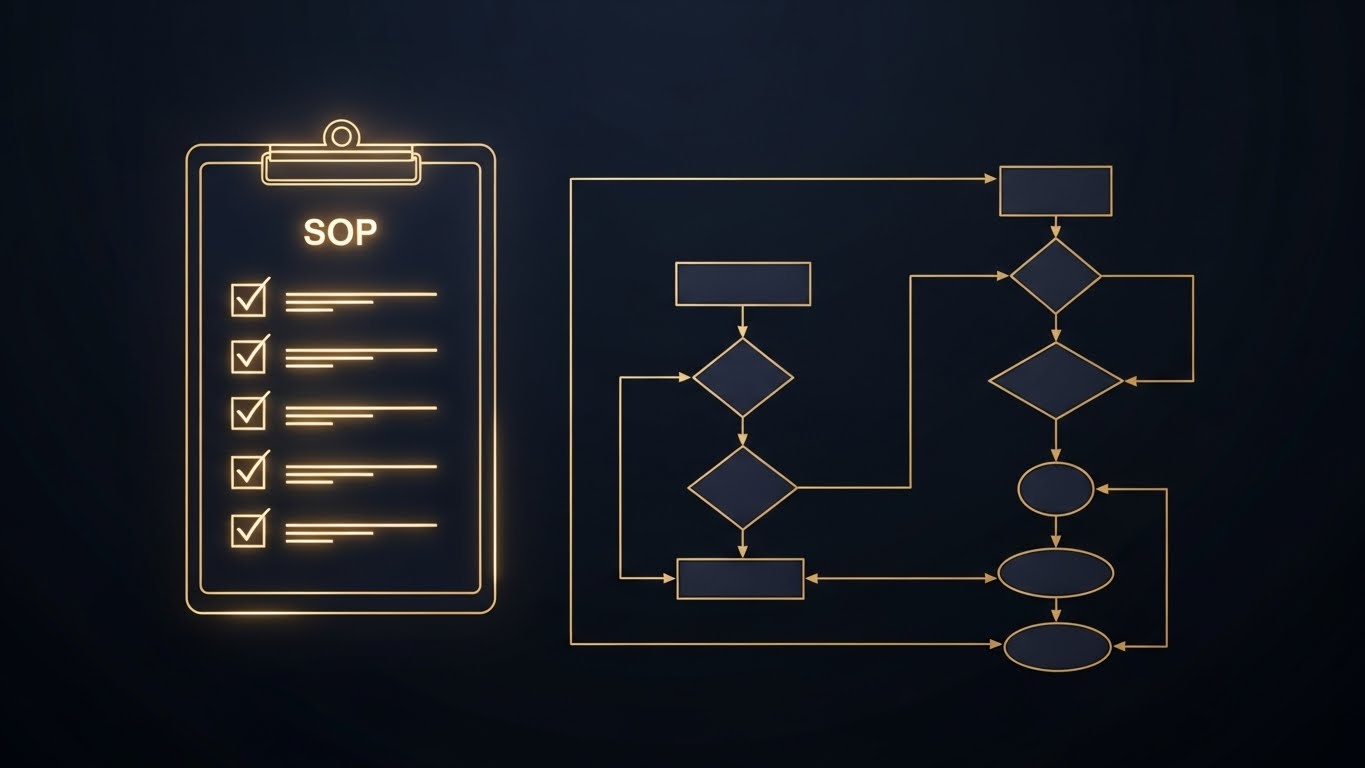
The Imperative of Process Mapping in a Dynamic Global Landscape
The current global economic climate demands more than just incremental improvements; it necessitates a radical re-evaluation of how work gets done. For SMBs expanding beyond their home turf, the challenge multiplies across different regulatory environments, cultural contexts, and technological infrastructures. Process mapping provides the essential clarity to navigate these complexities.Navigating Complexity and Enhancing Visibility
Think of your business as an intricate network of interconnected pathways. Without a map, understanding traffic flow, identifying bottlenecks, or planning new routes becomes an exercise in costly guesswork. In a multi-market context, this challenge is amplified by varying local regulations, distinct customer behaviors, and sometimes even fundamentally different operational paradigms. Process mapping offers a visual, standardized representation of these workflows, making previously opaque operations transparent. It highlights dependencies, clarifies roles, and reveals the true sequence of activities, from a simple customer inquiry to a complex cross-border [Procurement Strategy](https://get-scala.com/academy/procurement-strategy). This enhanced visibility is crucial for consistency and compliance across all territories.From Theory to Tangible ROI
The ultimate objective of any strategic initiative is measurable return on investment. Process mapping is not an academic exercise; it’s a direct path to tangible gains. By systematically documenting and analyzing processes, organizations typically identify opportunities for efficiency improvements ranging from 15-30% in operational costs within the first year. For instance, streamlining a global order fulfillment process through effective process mapping can reduce lead times by 20%, significantly improving customer satisfaction and freeing up capital. This strategic clarity directly contributes to improved resource allocation, reduced errors, and a more predictable operational framework, which is vital for scaling sustainably.Deciphering the Core: What is Process Mapping?
At its heart, **process mapping** is the graphical representation of a business process, depicting its steps, inputs, outputs, decisions, and actors. It transforms abstract workflows into clear, digestible visuals, providing a common understanding across departments and geographies.Key Elements and Standard Notations
A robust process map typically includes several critical elements:- Start/End Points: Clearly define where a process begins and concludes.
- Activities/Steps: The individual actions taken within the process.
- Decisions: Points where a choice must be made, leading to different paths (e.g., “Is payment received? Yes/No”).
- Connectors: Arrows indicating the flow and sequence of steps.
- Roles/Departments (Swimlanes): Horizontal or vertical lanes that designate responsibility for specific activities, showing cross-functional interactions.
The ‘As-Is’ vs. ‘To-Be’ Paradigm
Effective process mapping often involves a dual approach:- ‘As-Is’ Mapping: Documenting the process exactly as it currently exists, including all inefficiencies, workarounds, and undocumented steps. This provides a baseline understanding and exposes pain points.
- ‘To-Be’ Mapping: Designing the optimized future state of the process, incorporating improvements, automation opportunities, and best practices. This is where innovation and efficiency gains are conceptualized. The gap between the ‘As-Is’ and ‘To-Be’ maps highlights the potential for improvement and guides the implementation of changes, often leading to significant advancements in [Business Process Optimization](https://get-scala.com/academy/business-process-optimization).