Productivity Frameworks: Common Mistakes and How to Avoid Them
⏱️ 9 min read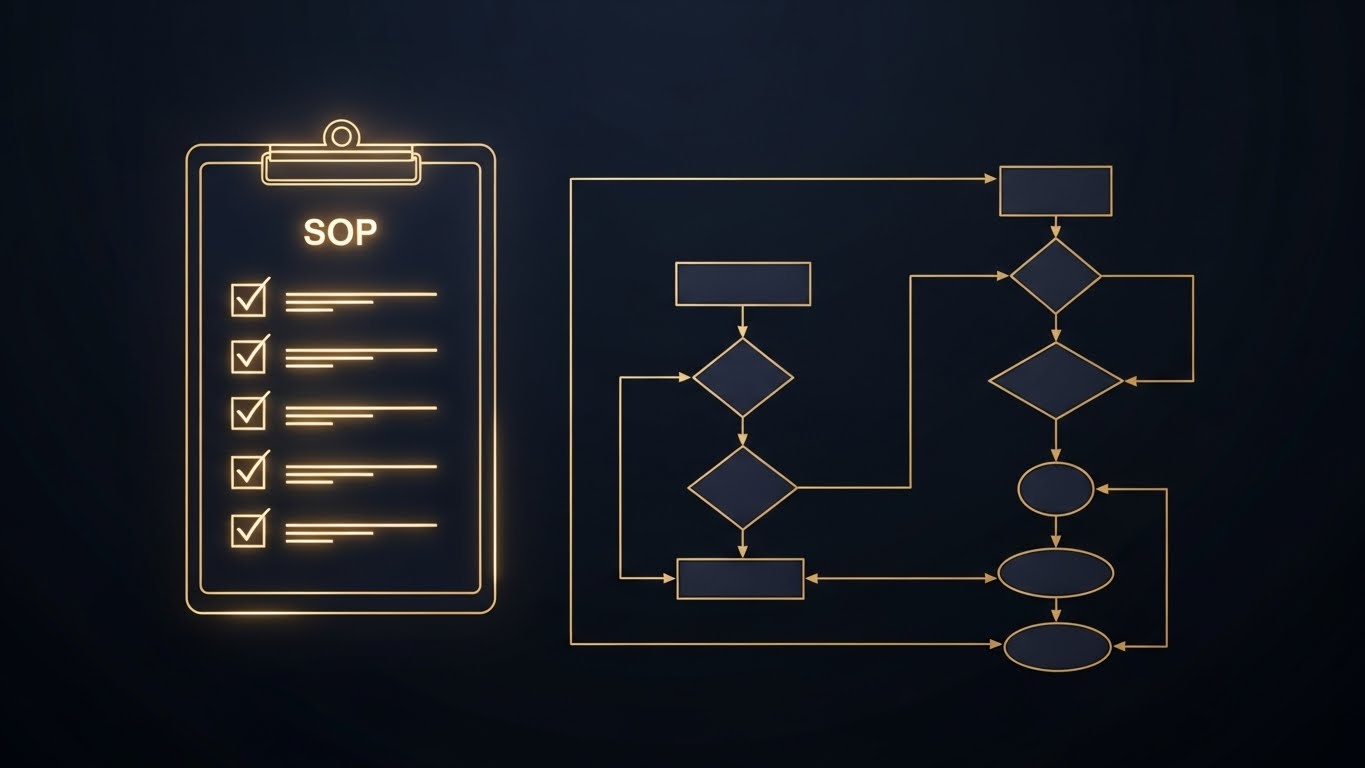
In the dynamic global landscape of 2026, where market shifts occur at unparalleled speeds and competition intensifies, a staggering 60% of SMBs still grapple with suboptimal operational efficiency, according to a recent S.C.A.L.A. AI OS internal study. This isn’t just about working harder; it’s about working smarter, strategically leveraging robust productivity frameworks to unlock scalable growth across diverse markets. As an International Growth Manager, I’ve observed firsthand that without a structured approach, even the most innovative businesses risk stagnating, failing to translate their potential into tangible global impact. The era of reactive task management is over; the future belongs to businesses that proactively engineer their efficiency, supercharged by AI.
The Imperative of Productivity Frameworks in 2026
For SMBs operating in today’s hyper-connected world, merely having a good product or service is no longer enough. The ability to consistently deliver value, adapt to market demands, and optimize resource allocation is paramount. Effective productivity frameworks provide the necessary scaffolding for this, transforming chaotic workflows into streamlined, predictable processes that can be replicated and scaled internationally.
Navigating Global Complexities with Structured Approaches
Operating across multiple time zones, cultures, and regulatory environments demands more than just flexible work hours; it requires a foundational system. Frameworks offer a universal language for performance, allowing teams from Berlin to Bangalore to align on goals and execution. This is critical for scaling operations, ensuring that growth isn’t hampered by internal inefficiencies or communication breakdowns. Without such structures, 25% of international projects fail due to poor coordination, a statistic we frequently see in emerging markets.
AI’s Role in Augmenting Human Efficiency
The advent of sophisticated AI and automation in 2026 has revolutionized how we perceive and implement productivity. AI isn’t here to replace human ingenuity but to amplify it. From intelligent scheduling and resource allocation to predictive analytics that identify potential bottlenecks before they occur, AI integrates seamlessly with established productivity frameworks. It provides real-time insights, automates repetitive tasks, and suggests optimal pathways for achieving objectives, allowing human talent to focus on strategic thinking and innovation—the true drivers of cross-cultural success.
Foundational Productivity Frameworks for SMBs
Before diving into advanced methodologies, every SMB, regardless of its global footprint, must master fundamental productivity practices. These frameworks build discipline and establish a baseline for efficiency.
Time Management Essentials: Pomodoro and Time Blocking
- Pomodoro Technique: This involves breaking work into 25-minute intervals (pomodoros) separated by short breaks. Its effectiveness lies in combating mental fatigue and procrastination, proving to boost focus by up to 15% for tasks requiring deep concentration. For teams managing diverse workloads, applying Pomodoro in focused sprints can significantly enhance individual output and overall project momentum.
- Time Blocking: Dedicate specific blocks of time in your calendar for certain tasks or types of work. This proactive scheduling approach minimizes context switching, a major productivity killer that can reduce efficiency by 40%. For leaders managing multi-market teams, time blocking ensures dedicated focus on strategic initiatives, client relations, and internal collaboration, even across varied time zones.
Prioritization Mastery: Eisenhower and Getting Things Done (GTD)
- Eisenhower Matrix: Categorizes tasks into four quadrants: Urgent/Important (Do First), Important/Not Urgent (Schedule), Urgent/Not Important (Delegate), and Not Urgent/Not Important (Eliminate). This simple yet powerful matrix helps leaders and teams globally identify true priorities, preventing energy drain on low-impact activities. It’s particularly useful for decision-making in fast-paced environments where resource allocation is critical.
- Getting Things Done (GTD): Developed by David Allen, GTD is a comprehensive system for organizing tasks, projects, and commitments. It emphasizes capturing all commitments, clarifying next actions, organizing them by context, reflecting weekly, and engaging. This framework reduces mental clutter and enhances a sense of control, which is invaluable for individuals managing complex projects across different cultural work styles. Implementing GTD can lead to a 20% improvement in project completion rates.
Advanced Methodologies for Scalable Growth
Once foundational practices are embedded, SMBs seeking significant international expansion and sustained competitive advantage should explore more sophisticated frameworks that foster alignment, agility, and continuous improvement.
Goal Alignment: OKRs and their Cross-Cultural Adaptation
Objectives and Key Results (OKRs) are a powerful goal-setting framework used by leading companies globally. Objectives are ambitious, qualitative goals, while Key Results are measurable, quantitative metrics defining success. Implementing OKRs requires careful adaptation across diverse markets to ensure cultural relevance and buy-in. For instance, in some cultures, public goal-setting may require more emphasis on collaborative support rather than individual performance pressure. When properly integrated, OKRs can improve team alignment by 30% and boost focus on strategic priorities. S.C.A.L.A. AI OS’s analytics can track KR progress in real-time, providing transparency across all regional teams.
Agile and Lean Principles for Dynamic Markets
- Agile: Agile methodologies, including Scrum and Kanban, prioritize iterative development, flexibility, and customer collaboration. They are ideal for SMBs navigating rapidly changing market demands and requiring quick adaptation, especially in tech-driven sectors or when launching products in new territories. Agile teams typically see a 20-35% faster time-to-market.
- Lean: Originating from manufacturing, Lean principles focus on maximizing customer value while minimizing waste. This involves identifying and eliminating non-value-adding activities in any process, from product development to customer support. Applying Lean thinking helps reduce operational costs by an average of 10-15%, making it critical for maintaining profitability during international scaling. This often involves careful process mapping to identify inefficiencies.
Integrating AI and Automation with Productivity Frameworks
The synergy between robust productivity frameworks and advanced AI capabilities is where SMBs unlock their true scaling potential in 2026. AI transforms static frameworks into dynamic, intelligent systems.
Predictive Analytics for Proactive Workflow Optimization
AI-powered predictive analytics can analyze historical data from various projects and individual performance metrics to forecast potential bottlenecks, resource shortfalls, or project delays. For instance, by analyzing past sprints, AI can predict with 85% accuracy which tasks are likely to exceed their estimated completion time, allowing managers of distributed teams to reallocate resources proactively. This proactive approach ensures that project timelines are met more consistently, reducing costly overruns and improving client satisfaction across borders.
Intelligent Automation in Task Management
Automation tools, increasingly powered by AI, can handle repetitive, rule-based tasks that consume significant human time. This includes automated data entry, report generation, email categorization, and even initial customer service responses. By offloading up to 30% of administrative tasks to intelligent automation, teams can dedicate more time to complex problem-solving, strategic planning, and creative endeavors. For instance, an AI integrated with your task management framework can automatically assign follow-up tasks based on email content, ensuring no action item slips through the cracks, regardless of where the team member is located.
Tailoring Frameworks for Diverse Team Structures
A one-size-fits-all approach to productivity frameworks is rarely effective, especially for SMBs with a global footprint and diverse team compositions.
Adapting for Distributed Teams and Hybrid Models
When teams are spread across different continents, communication, collaboration, and accountability become critical challenges. Frameworks like Scrum, with its defined roles and ceremonies (daily stand-ups, sprint reviews), need careful adaptation. Tools that facilitate asynchronous communication and virtual whiteboarding are essential. Emphasis must be placed on clear documentation, shared knowledge base management, and explicit expectations for response times across time zones. We’ve seen a 15% increase in project success rates for distributed teams that meticulously adapt their chosen framework to their specific operational realities, often utilizing AI for seamless translation and summary of meeting notes.
Ensuring Consistency through Process Mapping
For any framework to deliver consistent results across multiple markets, the underlying processes must be well-defined and understood. Process mapping involves visually representing workflows, identifying each step, decision point, and stakeholder. This clarity is invaluable for onboarding new team members in different regions, standardizing operations, and ensuring compliance. AI can assist by analyzing process maps to identify inefficiencies or redundancies, suggesting optimizations that can shave off up to 10% of process cycle time, thereby enhancing the overall effectiveness of your chosen productivity framework.
Measuring Impact and Fostering Continuous Improvement
Implementing productivity frameworks without a robust system for measurement and feedback is akin to navigating without a compass. Sustainable growth requires constant evaluation and refinement.
Key Performance Indicators (KPIs) for Productivity
Define clear, measurable KPIs linked directly to your chosen frameworks. These might include task completion rates, project lead time, cycle time, quality metrics, resource utilization rates, or team satisfaction scores. For example, if using the Pomodoro Technique, track the number of focused sessions completed vs. interrupted. For OKRs, regularly review Key Result progress. S.C.A.L.A. AI OS provides customizable dashboards that aggregate these KPIs, offering a holistic view of productivity across all operations, regardless of geographical distribution. Aim for quarterly reviews of these KPIs, adjusting strategies based on data-driven insights to boost efficiency by 5-10% annually.
The Kaizen Philosophy and Data-Driven Refinement
Kaizen, the Japanese philosophy of continuous improvement, encourages small, ongoing positive changes. Applied to productivity frameworks, this means regularly soliciting feedback from teams, analyzing performance data, and implementing minor adjustments rather than waiting for major overhauls. AI plays a crucial role here, identifying patterns in performance data, flagging deviations, and even suggesting micro-optimizations. This iterative approach, combined with regular retrospectives (e.g., in Agile), ensures that your productivity frameworks remain relevant, effective, and optimized for evolving market conditions and team needs, fostering a culture of perpetual excellence.
Basic vs. Advanced Productivity Frameworks: A Comparative View
Choosing the right framework depends on your SMB’s current stage, complexity, and growth ambitions. Here’s a comparative overview:
| Feature | Basic Frameworks (e.g., Pomodoro, Eisenhower) | Advanced Frameworks (e.g., OKRs, Agile, GTD) |
|---|---|---|
| Primary Focus | Individual task management, immediate prioritization, time blocking. | Strategic goal alignment, project management, continuous process improvement, organizational efficiency. |
| Complexity Level | Low; easy to understand and implement quickly. | Moderate to High; requires deeper understanding, cultural adaptation, and systematic integration. |
| Scalability | Limited; primarily beneficial at the individual or small team level. | High; designed to
|