How to Implement Business Process Optimization in Your Business: An Operational Guide
⏱️ 7 min read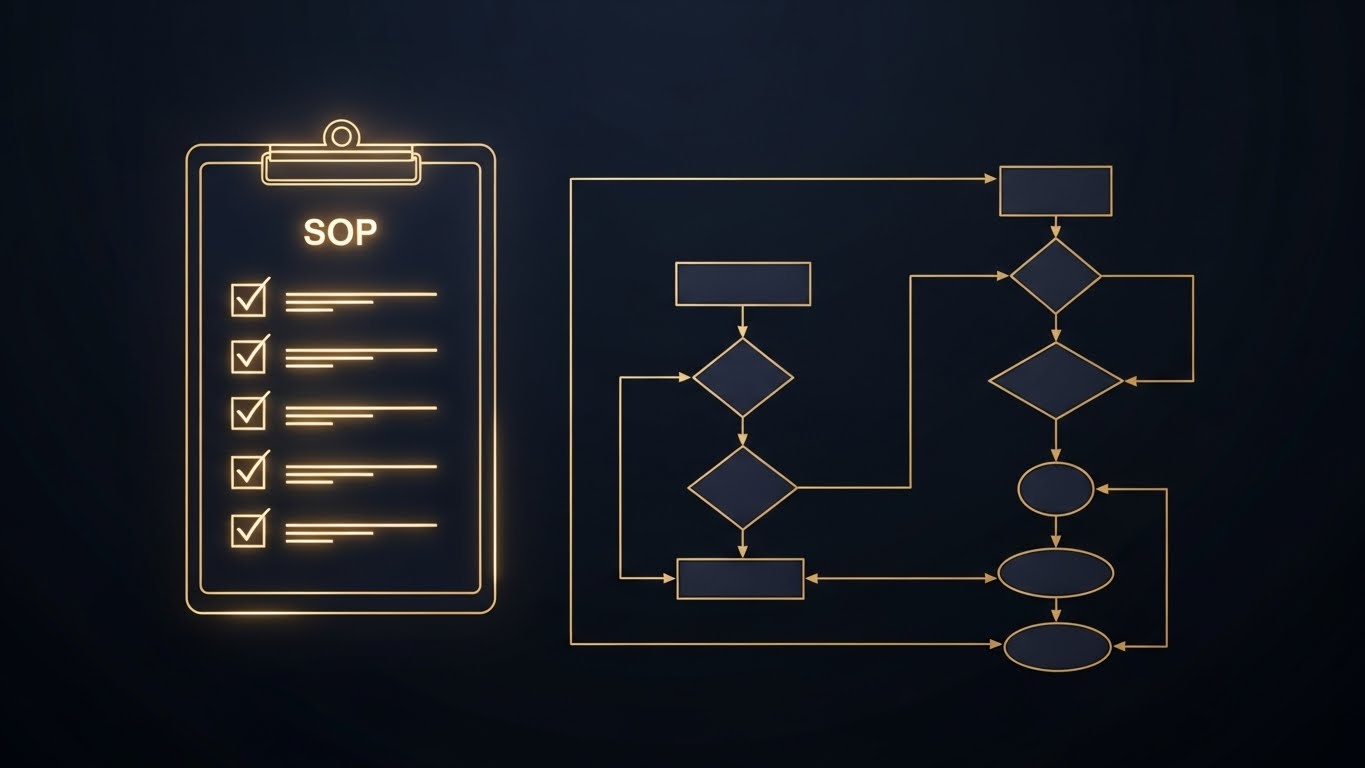
The Revenue Bleed: Why Business Process Optimization Isn’t Optional
The status quo is a profit killer. Sticking to outdated methods means hemorrhaging resources, time, and ultimately, market share. Every redundant step, every manual data transfer, every untracked delay directly subtracts from your bottom line. We’re seeing companies that fail to optimize processes report up to 30% higher operational costs compared to their agile, optimized competitors. This isn’t a suggestion; it’s a strategic imperative for survival and aggressive growth.
The Cost of Inaction: Quantifying Lost Opportunity
Consider the cumulative effect: a 10-minute delay in processing orders across 50 orders daily translates to over 40 hours of lost productivity weekly. Multiply that by salaries, overhead, and delayed revenue recognition. This isn’t just about efficiency; it’s about freeing up capital to invest in growth, innovation, and market expansion.
Competitive Edge: Outmaneuvering the Slow
While your competitors are grappling with legacy systems and manual errors, proactive BPO allows you to accelerate product delivery, enhance customer experience, and respond to market shifts with unparalleled agility. This speed-to-market advantage can mean the difference between leading your sector or becoming obsolete.
Defining BPO: Beyond Buzzwords, Towards Bottom-Line Impact
Forget the fluffy definitions. For S.C.A.L.A. AI, business process optimization is the systematic, data-driven approach to analyzing existing workflows, identifying inefficiencies, and implementing solutions that demonstrably reduce costs, accelerate output, and maximize revenue. It’s not about making things “nicer”; it’s about making them measurably more profitable.
Process vs. Project: Focusing on Repeatable Profit
BPO targets repeatable processes – those everyday operational tasks that form the backbone of your business. Unlike one-off projects, optimizing these processes yields continuous, compounding returns, driving sustained profitability year after year. This isn’t a quick fix; it’s foundational growth engineering.
The Core Principles: Value, Velocity, Volume
- Value: Eliminate non-value-add activities that consume resources without contributing to customer satisfaction or revenue.
- Velocity: Accelerate process execution, reducing cycle times and increasing throughput.
- Volume: Enable your operations to handle increased demand without proportional cost increases, scaling efficiently.
The AI Mandate: 2026’s Non-Negotiable Edge for SMBs
If you’re still debating AI’s role in BPO, you’ve already lost ground. In 2026, AI is not a luxury; it’s the engine of modern business process optimization. Generative AI, predictive analytics, and intelligent automation are transforming every aspect of operations, delivering insights and efficiencies previously unimaginable for SMBs. Those who embrace it will dominate; those who don’t will simply be outmaneuvered.
Generative AI for Task Automation: Beyond RPA
Generative AI, especially Large Language Models (LLMs), is moving beyond simple Robotic Process Automation (RPA) by automating complex, unstructured data tasks. Imagine AI drafting initial customer service responses, summarizing extensive reports, or even generating preliminary marketing copy – tasks that once consumed hours, now completed in minutes, boosting productivity by up to 40% in pilot programs.
Predictive Analytics for Proactive Optimization
AI’s true power lies in its ability to predict. By analyzing vast datasets, AI can forecast potential bottlenecks, predict equipment failures, optimize inventory levels, and even anticipate customer demand with 90%+ accuracy. This shifts BPO from reactive problem-solving to proactive, revenue-driving strategy.
Identifying Your Profit Sinks: Data-Driven Bottleneck Analysis
You can’t optimize what you don’t measure. The first aggressive step in BPO is a brutal, objective assessment of where your processes are failing. This isn’t about gut feelings; it’s about hard data pinpointing every choke point, every delay, and every dollar wasted. We prioritize areas with the highest potential for immediate cost reduction and revenue uplift.
Process Mining: Unearthing Hidden Inefficiencies
Leverage process mining tools to automatically discover, monitor, and improve real processes by extracting knowledge from event logs readily available in your information systems. This reveals the actual execution paths, highlighting deviations from optimal flows and exposing hidden rework loops that inflate costs by 10-15%.
Stakeholder Interviews & Gemba Walks: Ground-Level Truths
Combine data with on-the-ground observation. Interview employees directly involved in processes to understand their pain points and workarounds. A “Gemba walk” (observing work where it happens) can reveal practical bottlenecks that metrics alone might miss. This dual approach ensures a comprehensive, actionable understanding.
Process Mapping for Maximum Gain: Visualizing the Value Stream
Once bottlenecks are identified, clear, concise process maps are essential. This isn’t just diagramming; it’s about creating a visual blueprint for profitability. Value Stream Mapping (VSM) is crucial here, distinguishing between value-adding steps and waste, allowing you to aggressively trim the fat and accelerate flow. For best results, refer to Documentation Best Practices.
As-Is vs. To-Be: The Blueprint for Transformation
Document the ‘As-Is’ state: precisely how work is done today, including all delays and handoffs. Then, design the ‘To-Be’ state: the optimized process, frictionless and efficient, explicitly detailing how AI and automation will eliminate waste and accelerate output. The gap between these two maps represents your potential revenue gain.
Swimlane Diagrams: Clarifying Roles and Responsibilities
Use swimlane diagrams to clearly delineate ownership and handoffs between departments or individuals. This immediately exposes communication breakdowns, accountability gaps, and redundant approvals that slow down critical operations, often cutting process cycle times by up to 20% when implemented effectively.
KPIs That Drive Decisions: Metrics, Not Maybes
Your BPO efforts are worthless without measurable impact. We define Key Performance Indicators (KPIs) upfront, directly linked to revenue and cost reduction. Every optimization must move these numbers. If it doesn’t, it’s a distraction, not an improvement.
Operational KPIs: The Engine Room of Efficiency
- Cycle Time: Time from start to finish for a specific process (e.g., order fulfillment from 72 hours to 24 hours).
- Throughput: Number of units processed per unit of time (e.g., invoices processed per hour, increased by 50%).
- Error Rate: Percentage of defects or rework required (e.g., reducing data entry errors from 5% to 0.5%).
- Resource Utilization: How effectively assets or personnel are used (e.g., increasing machine uptime by 15%).
Financial & Customer KPIs: The Ultimate Proof Points
- Cost Per Unit: Direct cost reduction per product or service delivered.
- Return on Investment (ROI): The financial gain relative to the cost of BPO initiatives. Aim for a minimum 2x ROI within 12 months.
- Customer Satisfaction (CSAT): Direct correlation between faster, more accurate processes and happier customers (e.g., 25% increase in positive feedback).
- Net Promoter Score (NPS): A direct indicator of customer loyalty and willingness to recommend, driven by superior service.
Automation: Your Gateway to Scalable Revenue
Manual tasks are profit vacuums. Automation isn’t just about saving labor; it’s about enabling scale without proportional cost increases. Robotic Process Automation (RPA), coupled with AI, transforms repetitive, rule-based tasks into high-speed, error-free operations. This is non-negotiable for any SMB aiming for aggressive growth.
RPA for Repetitive Tasks: The Low-Hanging Fruit
Implement RPA bots for tasks like data entry, invoice processing, report generation, and system integrations. This can reduce manual effort by 70-90%, reallocating human capital to higher-value activities that AI can’t yet handle. It’s an immediate, measurable boost to productivity.
Intelligent Document Processing (IDP): Unlocking Unstructured Data
Leverage AI-powered IDP to extract, classify, and validate data from unstructured documents (e.g., contracts, emails, forms) with accuracy rates exceeding 95%. This dramatically accelerates processes reliant on document handling, such as onboarding, claims processing, or compliance checks.